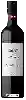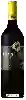
Winery The HedonistBacchus Block
 White wine


This wine generally goes well with
Details and technical informations about Winery The Hedonist's Bacchus Block.
Discover the grape variety: Baroque
From a morphological point of view, Baroque seems to have common origins with Tannat. Still called Blanc Bordelais, this white grape variety is distinguished essentially by the characteristics of its leaves. Those that are still young are both yellowish and downy. Their bumps have a somewhat bronzed appearance. The adult leaves have angular teeth. The leaves are not very three-lobed and have a pubescent, downy blade. The Baroque is grown in the Adour basin, mainly in Tursan and in certain vineyards in the Gers. Its production area is therefore not very large. This grape variety manages to resist oidium, unlike other varieties, and its harvest must be well done and free of rot. The harvest must be well done and free of rot, which leads to a better result and a more successful wine production. Moreover, the development of Baroque must be slowed down in time, bearing in mind that this type of grape variety only matures about twenty days after Chasselas.
Last vintages of this wine
The best vintages of Bacchus Block from Winery The Hedonist are 2010, 0
Informations about the Winery The Hedonist
The Winery The Hedonist is one of of the world's greatest estates. It offers 12 wines for sale in the of McLaren Vale to come and discover on site or to buy online.

The wine region of McLaren Vale
The wine region of McLaren Vale is located in the region of Fleurieu of Australie du Sud of Australia. We currently count 599 estates and châteaux in the of McLaren Vale, producing 2626 different wines in conventional, organic and biodynamic agriculture. The wines of McLaren Vale go well with generally quite well with dishes .
The wine region of Australie du Sud
SouthAustralia is one of Australia's six states, located (as the name suggests) in the south of the vast island continent. It's the engine room of the Australian wine industry, responsible for about half of the country's total production each year. But there's more to the region than quantity - countless high-quality wines are produced here, most from the region's signature Grape, Shiraz. These include such fine, collectible wines as Penfolds Grange, Henschke Hill of Grace, Torbreck The Laird and d'Arenberg The Dead Arm.
The word of the wine: Solera
A method of maturing practiced in Andalusia for certain sherries, which aims to continuously blend older and younger wines. It consists of stacking several layers of barrels; those located at ground level (solera) contain the oldest wines, the youngest being stored in the barrels on the upper level. The wine to be bottled is taken from the barrels on the lower level, which is replaced by younger wine from the upper level, and so on.