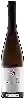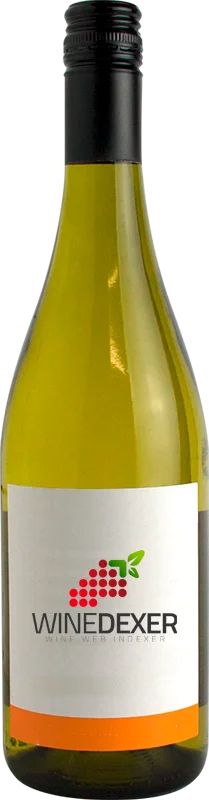
Winery HauckBlanc de Noir Spätburgunder Kabinett Trocken
 White wine



This wine generally goes well with vegetarian
Food and wine pairings with Blanc de Noir Spätburgunder Kabinett Trocken
Pairings that work perfectly with Blanc de Noir Spätburgunder Kabinett Trocken

Original food and wine pairings with Blanc de Noir Spätburgunder Kabinett Trocken
The Blanc de Noir Spätburgunder Kabinett Trocken of Winery Hauck matches generally quite well with dishes of vegetarian such as recipes of mushroom, bacon and gruyere quiche.
Details and technical informations about Winery Hauck's Blanc de Noir Spätburgunder Kabinett Trocken.
Discover the grape variety: Phoenix
Interspecific cross between the white bacchus and the white Villard obtained in 1964 by Gerhardt Erich Alleweldt (1927/2005) at the Geilweilerhof Station in Siebeldingen, Germany. It should be noted that the sirius and the staufer were also born from these same parents. Phoenix is little known even in France, although it is registered in the Official Catalogue of varieties of table grapes on the A2 list.
Last vintages of this wine
The best vintages of Blanc de Noir Spätburgunder Kabinett Trocken from Winery Hauck are 2012, 0
Informations about the Winery Hauck
The Winery Hauck is one of of the world's great estates. It offers 79 wines for sale in the of Rheinhessen to come and discover on site or to buy online.

The wine region of Rheinhessen
Rheinhessen is Germany's largest region for producing the quality wines of the Qualitätswein bestimmter Anbaugebiete (QbA) and Prädikatswein designations, with roughly 26,500 hectares (65,000 acres) of Vineyard">Vineyards as of 2014. Many of its most significant viticultural areas are favorably influenced by the Rhine river, which runs aLong its North and eastern borders. The Rhine, along with the Nahe river to the west and the Haardt mountains to its South, form a natural border. Rheinhessen covers an area south of Rheingau, north of Pfalz and east of Nahe, and is located within the Rhineland-Palatinate federal state.
The word of the wine: Hat
Solid part (marc), composed of pips and skins (sometimes of the stalk), which forms at the top of the tank during fermentation. The pigeage consists in breaking this cap to put back in suspension these elements and to favour the exchanges between the juice and the skins.