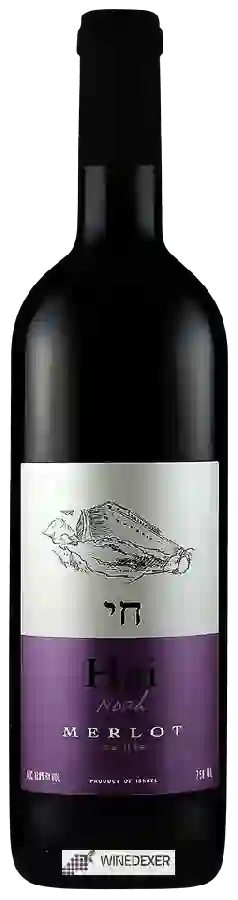
Winery HaiNoah Merlot
 Red wine


This wine is composed of 100% of the grape variety Merlot.
In the mouth this red wine is a powerful.
This wine generally goes well with beef, veal or lamb.

Taste structure of the Noah Merlot from the Winery Hai
Light | Bold | |
Smooth | Tannic | |
Dry | Sweet | |
Soft | Acidic |
In the mouth the Noah Merlot of Winery Hai in the region of Galilee is a powerful.
Wine flavors and olphactive analysis

Food and wine pairings with Noah Merlot
Pairings that work perfectly with Noah Merlot



Original food and wine pairings with Noah Merlot
The Noah Merlot of Winery Hai matches generally quite well with dishes of beef, lamb or veal such as recipes of beef kidney, chicken with merguez and tomatoes or veal roast casserole.
Details and technical informations about Winery Hai's Noah Merlot.
Discover the grape variety: Merlot
Round and fleshy reds with a velvety texture, showing aromas of ripe plum, black cherry, cocoa and truffle notes with age. Supple tannins, generous alcohol, indulgent finish. Pillar of Libournais (Pomerol with Pétrus, Saint-Émilion with Cheval Blanc and Ausone) and signature of Super Tuscans, Italian Wales and Washington State. A cross of Cabernet Franc × Magdeleine Noire, France's most planted red variety.
Last vintages of this wine
The best vintages of Noah Merlot from Winery Hai are 0
Informations about the Winery Hai
The Winery Hai is one of of the world's greatest estates. It offers 6 wines for sale in the of Galilee to come and discover on site or to buy online.

The wine region of Galilee
Israel's wine heartland in the north, a benchmark quality zone. Powerful, structured reds with signature notes of ripe blackcurrant, blackberry, dark chocolate, herbes de Provence and spices, firm tannins and a sun-soaked palate. Dominant international grapes: dense Cabernet Sauvignon, round Merlot, peppery Syrah and colourful Petit Verdot. Round Chardonnay and lively Sauvignon Blanc whites.
The word of the wine: Astringent
Said of a wine that is a bit harsh and rough on the palate. Astringency often appears in young red wines that are rich in tannins and need to be rounded out.