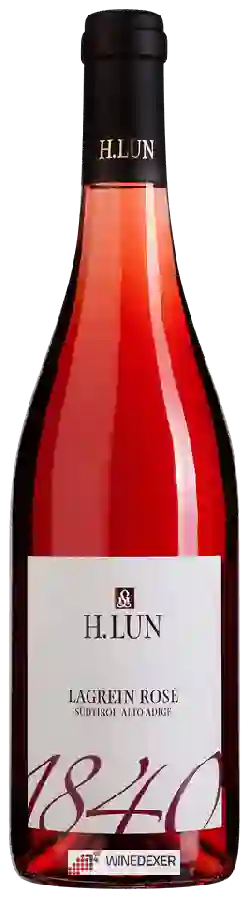
Winery H. LunLagrein Rosé '1840'
 Pink wine



This wine generally goes well with

Details and technical informations about Winery H. Lun's Lagrein Rosé '1840'.
Discover the grape variety: Moscato Bianco
Charming, aromatic whites with a pale golden robe, a luscious and slightly sparkling palate, showing intense signature aromas of muscat, rose, sage, white flowers, fresh grape and exotic fruits. A festive, delicate profile with low alcohol. The undisputed star of Asti DOCG and Moscato d'Asti DOCG in Piedmont, the signature of Italy's great muscats. The Italian synonym for Muscat Blanc à Petits Grains, one of the oldest aromatic varieties cultivated in the world.
Last vintages of this wine
The best vintages of Lagrein Rosé '1840' from Winery H. Lun are 2019, 2017, 2016, 0 and 2018.
Informations about the Winery H. Lun
The Winery H. Lun is one of of the world's great estates. It offers 31 wines for sale in the of Südtirol - Alto Adige to come and discover on site or to buy online.

The wine region of Südtirol - Alto Adige
Star of Italy's great Alpine whites: precise Pinot Grigio with notes of pear and almond, exuberant Gewürztraminer (rose, lychee, spices), straight Pinot Blanc, lively citrus Sauvignon and taut Chardonnay. Identity native reds: deep Lagrein with black fruits, violet and firm tannins, light crunchy Schiava (Vernatsch) with notes of cherry and almond. High-altitude vineyard (200-1000 m) on bilingual Alpine slopes, 65% white. Glacial terroir, sun and night-time freshness.
The wine region of Trentino-Alto-Adige
Italy's northernmost alpine vineyard, two identities. Aromatic, precise whites are the stars: signature opulent Gewurztraminer (lychee, rose, spice), ample Pinot Grigio, mineral Pinot Bianco, lively high-altitude Muller-Thurgau. Native reds: dense fruity Teroldego (blackberry, violet), deep Lagrein with plum and chocolate notes, light crunchy Schiava, spicy Marzemino. Trento DOC Metodo Classico sparklers.
The word of the wine: Green harvest or green harvesting
The practice of removing excess bunches of grapes from certain vines, usually in July, but sometimes later. This is often necessary, but not always a good thing, as the remaining grapes tend to gain weight.