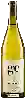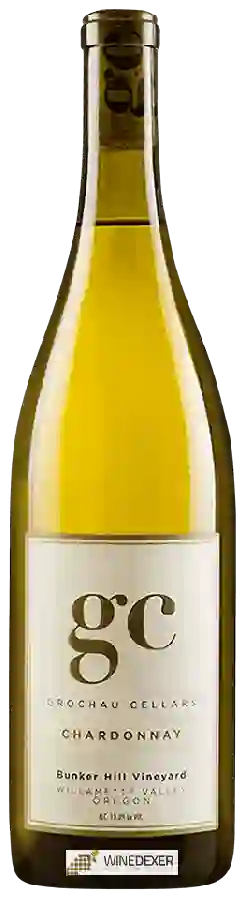
Winery Grochau CellarsBunker Hill Chardonnay
 wine
wine
This wine generally goes well with
The Bunker Hill Chardonnay of the Winery Grochau Cellars is in the top 0 of wines of Eola-Amity Hills.
Details and technical informations about Winery Grochau Cellars's Bunker Hill Chardonnay.
Discover the grape variety: Pecorino
A very old vine cultivated in Italy and very well known in particular in the Marche and Abruzzo regions, a trace of it has been found as far back as the second century B.C. where it is stated that it would have its first origins in Greece... almost unknown in France.
Informations about the Winery Grochau Cellars
The Winery Grochau Cellars is one of of the world's great estates. It offers 30 wines for sale in the of Eola-Amity Hills to come and discover on site or to buy online.

The wine region of Eola-Amity Hills
The wine region of Eola-Amity Hills is located in the region of Willamette Valley of Oregon of United States. Wineries and vineyards like the Domaine Evening Land or the Domaine Big Table Farm produce mainly wines red, white and pink. The most planted grape varieties in the region of Eola-Amity Hills are Pinot noir, Chardonnay and Riesling, they are then used in wines in blends or as a single variety. On the nose of Eola-Amity Hills often reveals types of flavors of cherry, pineapple or honeysuckle and sometimes also flavors of white peach, pear or apricot.
The wine region of Oregon
Oregon, located in the Pacific Northwest of the United States, is one of the youngest and most promising wine regions in the world. The state put itself on the international wine map in the late 1960s and has been building its position ever since. Production volumes have remained relatively quiet. The 2017 Oregon Vineyards and Wineries report recorded just under 34,000 acres (13,750 hectares) of planted vineyards.
The word of the wine: Removal of shoes
In the spring, this operation consists of removing the mound of earth formed at the foot of the vines by ploughing between the rows in the autumn.