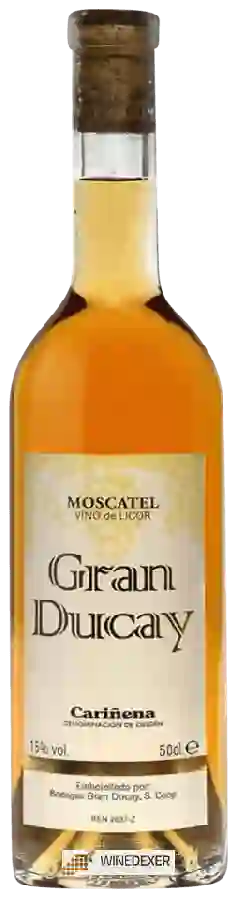
Winery Gran DucayCariñena Moscatel
 Sweet wine



This wine generally goes well with

Details and technical informations about Winery Gran Ducay's Cariñena Moscatel.
Discover the grape variety: Nero di Troia
Structured, intensely colored reds with a deep dark ruby robe, firm tannins and a dense palate, with signature aromas of black fruits (blackberry, blackcurrant), plum, spices, Mediterranean garrigue and balsamic notes. Fine ageing potential, sunny Apulian profile. Absolute star of Castel del Monte Nero di Troia Riserva DOCG, defining the great reds of Puglia. Indigenous Italian black variety from Puglia, grown mainly around Castel del Monte.
Last vintages of this wine
The best vintages of Cariñena Moscatel from Winery Gran Ducay are 0, 2016, 2018
Informations about the Winery Gran Ducay
The Winery Gran Ducay is one of of the world's greatest estates. It offers 6 wines for sale in the of Cariñena to come and discover on site or to buy online.

The wine region of Cariñena
Historic Aragón (DO since 1932), birthplace of Carignan (Cariñena here). Yet Garnacha dominates: fleshy, sun-soaked reds with signature notes of candied red fruit (cherry, raspberry), spices, pepper, garrigue and balsamic notes, round tannins and opulence. Many old vines. Also dense, tannic Cariñena (Mazuelo), supple Tempranillo.
The wine region of Aragon
Autonomous community of northeast Spain, historic kingdom of Iberian red Grenache (~75%). Signature Garnacha: generous and sun-drenched with signature ripe cherry, crushed strawberry, garrigue, kirsch, sweet spice and a balsamic touch, round tannins and a warm, alcoholic palate. 4 major DOs: Cariñena the largest (old vines), Calatayud high-altitude, Campo de Borja and Somontano at the Pyrenean foothills. Fresh Macabeo and Garnacha blanca whites.
The word of the wine: N-D
Negociant-distributor. In Champagne, a company that buys finished wines in bottles that are dressed under a brand name with the merchant's own labels.