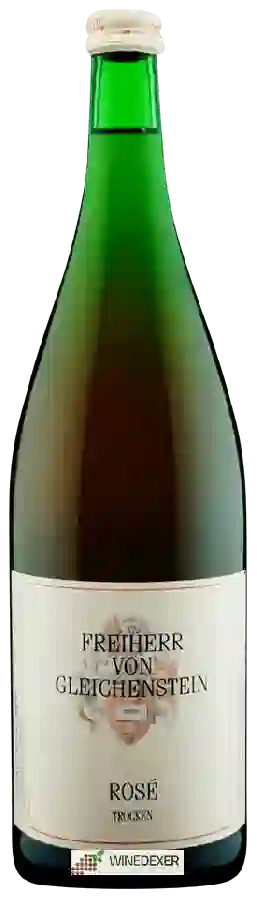
Winery Freiherr von GleichensteinTrocken Rosé
 Pink wine
This wine generally goes well with vegetarian

Food and wine pairings with Trocken Rosé
Pairings that work perfectly with Trocken Rosé

Original food and wine pairings with Trocken Rosé
The Trocken Rosé of Winery Freiherr von Gleichenstein matches generally quite well with dishes of vegetarian such as recipes of ham and comté quiche.
Details and technical informations about Winery Freiherr von Gleichenstein's Trocken Rosé.
Discover the grape variety: Aglianico
Powerful, tannic reds with deep colour and tight structure, with aromas of black cherry, blackberry, leather, tobacco, coffee and balsamic-volcanic mineral notes. High acidity and very fine ageing potential, often compared to nebbiolo. Star of Taurasi DOCG in Campania and Aglianico del Vulture DOCG in Basilicata (vines planted on volcanic soils). Late-ripening southern Italian variety of probable ancient Greek origin.
Informations about the Winery Freiherr von Gleichenstein
The Winery Freiherr von Gleichenstein is one of of the world's great estates. It offers 64 wines for sale in the of Baden to come and discover on site or to buy online.

The wine region of Baden
German capital of Pinot Noir (Spätburgunder): silky, fine reds with notes of red fruits, cherry, undergrowth and sweet spices, melted tannins. Round Grauburgunder (Pinot Gris), lively Weissburgunder, supple Müller-Thurgau, mineral Riesling. Germany's 3rd region (15,000 ha) in Baden-Württemberg facing Alsace, one of the country's warmest climates, volcanic soils at the Kaiserstuhl. Cradle of modern great German reds, elegant and fine.
The word of the wine: Maceration
Prolonged contact and exchange between the juice and the grape solids, especially the skin. Not to be confused with the time of fermentation, which follows maceration. The juice becomes loaded with colouring matter and tannins, and acquires aromas. For a rosé, the maceration is short so that the colour does not "rise" too much. For white wines too, a "pellicular maceration" can be practised, which allows the wine to acquire more fat.








