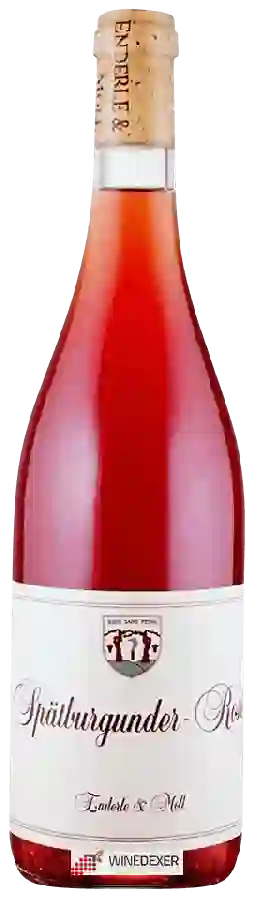
Winery Enderle & MollSpätburgunder Rosé
 Pink wine



This wine generally goes well with vegetarian
The Spätburgunder Rosé of the Winery Enderle & Moll is in the top 90 of wines of Baden.
Wine flavors and olphactive analysis



On the nose the Spätburgunder Rosé of Winery Enderle & Moll in the region of Baden often reveals types of flavors of non oak, earth or oak and sometimes also flavors of spices, red fruit or black fruit.
Food and wine pairings with Spätburgunder Rosé
Pairings that work perfectly with Spätburgunder Rosé

Original food and wine pairings with Spätburgunder Rosé
The Spätburgunder Rosé of Winery Enderle & Moll matches generally quite well with dishes of vegetarian such as recipes of quiche without pastry, courgette and blue cheese.
Details and technical informations about Winery Enderle & Moll's Spätburgunder Rosé.
Discover the grape variety: Ruby-cabernet
Intraspecific crossing carried out in 1936 by Doctor Harold Paul Olmo of the University of California in Davis (United States) between the carignan and the cabernet-sauvignon. The first plantings were made in 1948 in the United States (California). Today, it is less and less multiplied, but it can still be found in South Africa, Australia, Argentina, Chile, Uruguay, Yugoslavia, the United States, etc. In France, it is almost unknown.
Last vintages of this wine
The best vintages of Spätburgunder Rosé from Winery Enderle & Moll are 2015, 2018, 2017, 0 and 2019.
Informations about the Winery Enderle & Moll
The Winery Enderle & Moll is one of of the world's greatest estates. It offers 29 wines for sale in the of Baden to come and discover on site or to buy online.

The wine region of Baden
Baden is the southernmost of Germany's 13 official wine regions. It is also the warmest. Its relatively sunny, DryClimate permits the production of good-quality Spätburgunder (Pinot Noir) and ripe, relatively Full-bodied">Full-bodied examples of Grauburgunder (Pinot Gris) and Weissburgunder (Pinot Blanc). These are often made in oaked styles.
The word of the wine: Local wine
Table wine, but with the origin indicated. It corresponds to a particular legislation: the freedom to use grape varieties is greater than for the AOC, but the quality criteria such as the approval tastings can sometimes be more demanding. The legislation is still evolving, but for the moment there are three levels: regional (e.g. Vin de Pays d'Oc), departmental and local (e.g. Côtes de Thongue).