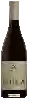
Winery Giulio & MauroMaxentia Ramantico Ramato Pinopt Grigio
 White wine


In the mouth this white wine is a powerful.
This wine generally goes well with lean fish, shellfish or mature and hard cheese.
Taste structure of the Maxentia Ramantico Ramato Pinopt Grigio from the Winery Giulio & Mauro
Light | Bold | |
Dry | Sweet | |
Soft | Acidic |
In the mouth the Maxentia Ramantico Ramato Pinopt Grigio of Winery Giulio & Mauro in the region of Trentino-Alto-Adige is a powerful.
Food and wine pairings with Maxentia Ramantico Ramato Pinopt Grigio
Pairings that work perfectly with Maxentia Ramantico Ramato Pinopt Grigio



Original food and wine pairings with Maxentia Ramantico Ramato Pinopt Grigio


The Maxentia Ramantico Ramato Pinopt Grigio of Winery Giulio & Mauro matches generally quite well with dishes of pasta, shellfish or mature and hard cheese such as recipes of pasta with vegetables, shrimp curry and coconut (thailand) or beetroot and potato gratin.
Details and technical informations about Winery Giulio & Mauro's Maxentia Ramantico Ramato Pinopt Grigio.
Discover the grape variety: Nero d'Avola
Most certainly of Italian origin, more precisely from Sicily where it is very well known. It should be noted that a certain number of Italian grape varieties bear the synonym or name "calabrese", whether or not followed by an epithet, and care should be taken not to confuse them. Calabrese is also known in the United States, Italy, Bulgaria and Malta. In France, it is virtually absent from the vineyard, although it is listed in the Official Catalogue of Wine Grape Varieties, list A1.
Last vintages of this wine
The best vintages of Maxentia Ramantico Ramato Pinopt Grigio from Winery Giulio & Mauro are 0
Informations about the Winery Giulio & Mauro
The Winery Giulio & Mauro is one of of the world's greatest estates. It offers 4 wines for sale in the of Trentino-Alto-Adige to come and discover on site or to buy online.

The wine region of Trentino-Alto-Adige
Trentino-Alto Adige is Italy's northernmost wine region, located right on the border with Austria. Production was once dominated by the local red varieties Lagrein and Schiava. Now white wines are becoming more important in terms of Volume. Increasingly, they are made from internationally renowned Grape varieties such as Pinot Grigio and Chardonnay.
The word of the wine: Burgundy melon
A white grape variety from Burgundy that is not widely used in its native region, but has spread to the Nantes region. It is the exclusive variety of Muscadet. It gives a dry pale yellow wine, supple and lively, with an intense bouquet, to which maturing on lees gives fatness and aromatic complexity.