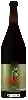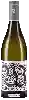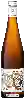
Winery GallerCocovino Assemblage Rosé
 wine
wine
This wine generally goes well with
The Cocovino Assemblage Rosé of the Winery Galler is in the top 0 of wines of Pfalz.
Details and technical informations about Winery Galler's Cocovino Assemblage Rosé.
Discover the grape variety: Allison seedless
American, intraspecific crossing between the red globe and the princess obtained in 2000 by the Sheehan genetics (California). It can be found in the United States, South Africa, Spain, Italy, ... almost unknown in France because of a very late maturity.
Informations about the Winery Galler
The Winery Galler is one of of the world's great estates. It offers 31 wines for sale in the of Pfalz to come and discover on site or to buy online.

The wine region of Pfalz
Pfalz is a key wine producing region in western Germany, located between the Rhein/Rhine river and the low-lying Haardt mountain range (a natural continuation of the Alsatian Vosges). It covers a rectangle of land 45 miles (75km) Long and 15 miles (25km) wide. To the NorthLiesRheinhessen; to the South, the French border and Alsace. In terms of both quality and quantity, Pfalz is one of Germany's most important regions, and one which shows great promise for the future.
The word of the wine: Musty (taste of)
A disgusting taste due to a defect in the grapes or, more commonly, a defect in the barrel.