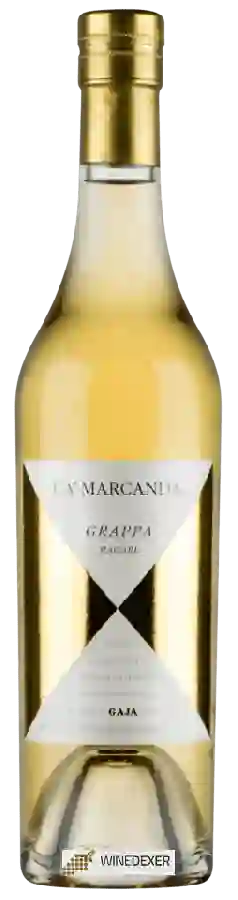
Winery GajaCa’Marcanda Magari Grappa
 Sweet wine


This wine generally goes well with

Wine flavors and olphactive analysis




On the nose the Ca’Marcanda Magari Grappa of Winery Gaja in the region of Piedmont often reveals types of flavors of non oak, earth or microbio and sometimes also flavors of oak, spices or red fruit.
Details and technical informations about Winery Gaja's Ca’Marcanda Magari Grappa.
Discover the grape variety: Zalema
Simple, fresh whites best drunk young, with a pale golden robe, an airy palate with moderate acidity, and discreet signature aromas of citrus (lemon), green apple and floral notes. Also a base for fortified wines and Andalusian mistelles. A historic pillar of Huelva wines, also used for fortified wines and mistelles in south-west Spain. Native Spanish white grape of Andalusia, grown in Condado de Huelva.
Last vintages of this wine

The best vintages of Ca’Marcanda Magari Grappa from Winery Gaja are 2007, 2009, 2008, 2012 and 2010.
Informations about the Winery Gaja
The Winery Gaja is one of of the world's great estates. It offers 54 wines for sale in the of Grappa di Barbaresco to come and discover on site or to buy online.

The wine region of Grappa di Barbaresco
Piedmontese marc brandy IG distilled from Barbaresco DOCG pomace (Langhe, Cuneo province, traditional artisan distillation, bottled at 40–50% vol, iconic Roagna and Capovilla distillates). Exclusive Nebbiolo: complex notes of nutmeg, liquorice, tobacco and cumin, smooth warm palate with an enveloping finish. A digestif reflecting the terroir of the Langhe.
The wine region of Piedmont
Kingdom of Nebbiolo: Barolo and Barbaresco DOCG, long-ageing reds with firm tannins and lively acidity, complex aromas of withered rose, sour cherry, tar, truffle and undergrowth. More accessible, tangy Barbera on red fruit, supple, crisp Dolcetto. Sweet, floral sparkling Moscato d'Asti, mineral, lemony Gavi (Cortese) white, round, almondy Arneis from Roero. 50,000 ha across the Langhe, Roero and Monferrato, UNESCO.
The word of the wine: Varietal
Said of wine aromas that are reminiscent of fresh grapes. The most demonstrative example is certainly that of wines made from the Muscat grape variety.