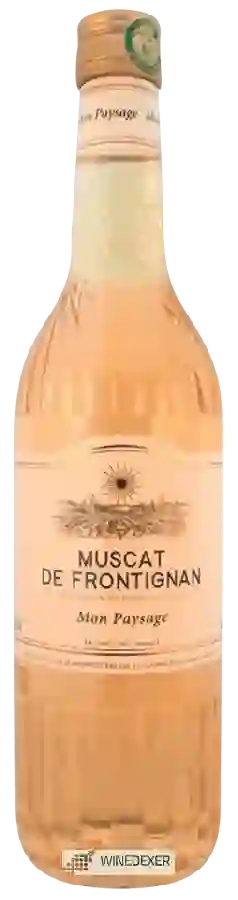
Cave des Vignerons de FrontignanPaysage Muscat de Frontignan
 Natural sweet wine
This wine generally goes well with
The Paysage Muscat de Frontignan of the Cave des Vignerons de Frontignan is in the top 30 of wines of Muscat de Frontignan.
Details and technical informations about Cave des Vignerons de Frontignan's Paysage Muscat de Frontignan.
Discover the grape variety: Durize
A very old variety, certainly originating from the Aosta Valley (Italy). According to published genetic analyses, it is directly related to the roussin and is the granddaughter of the cornalin from Valais. Nowadays, it is mainly cultivated in Switzerland and is practically endangered.
Informations about the Cave des Vignerons de Frontignan
The Cave des Vignerons de Frontignan is one of of the world's great estates. It offers 31 wines for sale in the of Muscat de Frontignan to come and discover on site or to buy online.

The wine region of Muscat de Frontignan
Muscat de Frontignan is an appellation for naturally Sweet wines from Frontignan-la Peyrade, a town on the Mediterranean coast in the Languedoc-roussillon">Languedoc-Roussillon region of southern France. The wines are made only from Muscat Blanc à Petits Grains. It is also used in the other Muscats of Languedoc (Muscat de Lunel, Muscat de Mireval and Muscat de Saint-Jean-de-Minervois). It is considered the best member of the Muscat family.
The wine region of Languedoc-Roussillon
Languedoc (formerly Coteaux du Languedoc) is a key appellation used in the Languedoc-Roussillon wine region of southern France. It covers Dry table wines of all three colors (red, white and rosé) from the entire region, but leaves Sweet and Sparkling wines to other more specialized appellations. About 75% of all Languedoc wines are red, with the remaining 25% split roughly down the middle between whites and rosés. The appellation covers most of the Languedoc region and almost a third of all the vineyards in France.
The word of the wine: Raw
A term whose meaning varies according to the region (terroir or estate), but which everywhere contains the idea of identifying a wine with a specific place of production.