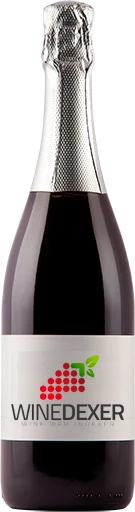
Winery Fratelli AgnesBonarda dell'Oltrepo Pavese Frizzante
 Sparkling wine


This wine generally goes well with
Details and technical informations about Winery Fratelli Agnes's Bonarda dell'Oltrepo Pavese Frizzante.
Discover the grape variety: Raffiat de Moncade
Raffiat de Moncade is a white Pyrenean grape variety. A descendant of the white gouais, it should not be confused with the arruffiac. This grape variety has truncated cone-shaped bunches of grapes, which are stalked and winged. The raffiat de Moncade was used by the ampelographer Marcel Durquety to obtain new varieties such as perdea, arroba and arriloba. Still called rousselet, the raffiat de Moncade is associated with an early budding in the year and a late maturity of the second period. It has a semi-spreading habit. This variety is quite productive and resists grey rot and powdery mildew quite well. Raffiat de Moncade is used in the vinification of certain wines from Tursan and Béarn. It is used to produce a neutral, fine, high alcohol and warm wine. It is often combined with petit manseng and gros manseng, which give the wines a high acidity.
Last vintages of this wine
The best vintages of Bonarda dell'Oltrepo Pavese Frizzante from Winery Fratelli Agnes are 0
Informations about the Winery Fratelli Agnes
The Winery Fratelli Agnes is one of of the world's greatest estates. It offers 15 wines for sale in the of Bonarda dell'Oltrepo Pavese to come and discover on site or to buy online.

The wine region of Bonarda dell'Oltrepo Pavese
The wine region of Bonarda dell'Oltrepo Pavese is located in the region of Oltrepò Pavese of Lombardie of Italy. Wineries and vineyards like the Domaine Fattoria Cabanon or the Domaine Castello di Luzzano produce mainly wines red and sparkling. The most planted grape varieties in the region of Bonarda dell'Oltrepo Pavese are Cardinal, they are then used in wines in blends or as a single variety. On the nose of Bonarda dell'Oltrepo Pavese often reveals types of flavors of black fruit, red fruit or non oak and sometimes also flavors of earth, oak or spices.
The wine region of Lombardia
Lombardy is one of Italy's largest and most populous regions, located in the north-central Part of the country. It's home to a handful of popular and well-known wine styles, including the Bright, cherry-scented Valtellina and the high-quality Sparkling wines Franciacorta and Oltrepo Pavese Metodo Classico. Lombardy is Italy's industrial powerhouse, with the country's second largest city (Milan) as its regional capital. Despite this, the region has vast tracts of unspoiled countryside, home to many small wineries that produce a significant portion of the region's annual wine production of 1.
The word of the wine: Mou
Said of a wine unbalanced by its lack of acidity.