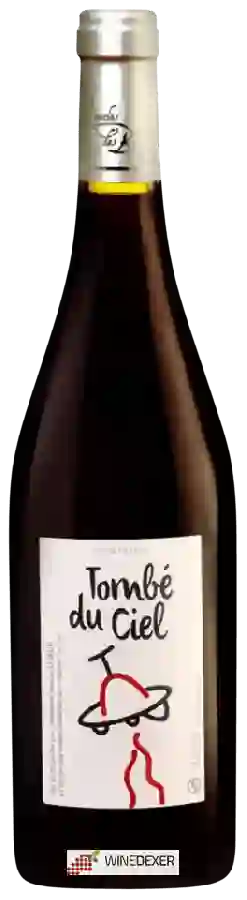
L'Enclos des BravesTombé du Ciel
 Red wine



This wine generally goes well with

Details and technical informations about L'Enclos des Braves's Tombé du Ciel.
Discover the grape variety: Pardotte
Simple, light and fruity reds with a lightly coloured ruby hue, smooth tannins and an airy palate with moderate acidity, featuring understated aromas of red fruits. Discreet rustic profile. Almost extinct, preserved in INRAE variety collections for its heritage value, it bears witness to the pre-phylloxera ampelographic diversity of South-West France and is among the heritage varieties being studied. Rare French black variety, once grown in the South-West.
Last vintages of this wine
The best vintages of Tombé du Ciel from L'Enclos des Braves are 2018
Informations about the L'Enclos des Braves
The L'Enclos des Braves is one of of the world's greatest estates. It offers 12 wines for sale in the of Gaillac to come and discover on site or to buy online.

The wine region of Gaillac
Millennia-old South-West mosaic (banks of the Tarn) with rare native grapes: Mauzac reigns in whites — dry, pearled or sweet with notes of apple, pear, honey and white flowers, signature freshness. Ample Loin-de-l'œil and Ondenc complement. Duras in spicy, peppery reds, fleshy Braucol (Fer Servadou) (blackcurrant, raspberry, blackberry, structured tannins) and Syrah in blends. Iconic ancestral-method Gaillac sparkling.
The wine region of South West
French mosaic of strong identities south of Bordeaux. Cahors and its Malbec ("black wine"): deep reds with notes of blackberry, plum, violet, tobacco and cocoa, firm tannins. Madiran and its dense, age-worthy Tannat. Jurançon whites: golden sweet (apricot, honey, pineapple) and lively dry from Petit Manseng.
The word of the wine: Maceration
Prolonged contact and exchange between the juice and the grape solids, especially the skin. Not to be confused with the time of fermentation, which follows maceration. The juice becomes loaded with colouring matter and tannins, and acquires aromas. For a rosé, the maceration is short so that the colour does not "rise" too much. For white wines too, a "pellicular maceration" can be practised, which allows the wine to acquire more fat.