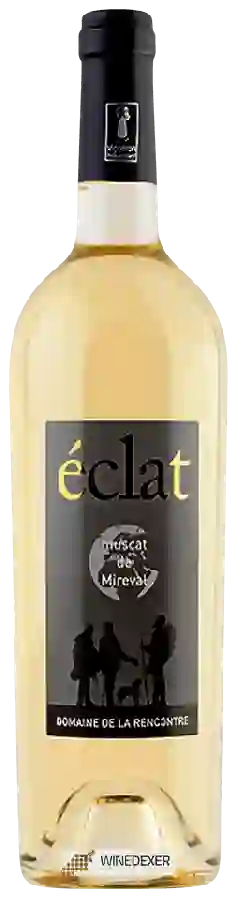
Domaine de la RencontreÉclat Muscat de Mireval
 Natural sweet wine


This wine generally goes well with spicy food and sweet desserts.

Food and wine pairings with Éclat Muscat de Mireval
Pairings that work perfectly with Éclat Muscat de Mireval


Original food and wine pairings with Éclat Muscat de Mireval
The Éclat Muscat de Mireval of Domaine de la Rencontre matches generally quite well with dishes of spicy food or sweet desserts such as recipes of spanish paella or tiramisu (original recipe).
Details and technical informations about Domaine de la Rencontre's Éclat Muscat de Mireval.
Discover the grape variety: Chelois
Colored, fruity reds with an intense ruby robe, smooth tannins and a supple palate, with simple aromas of red fruits (cherry, raspberry), soft spices and lightly foxy hybrid notes. Productive profile for early drinking. Now marginal in France, grown mainly in Canada (Ontario, Quebec) and the north-eastern United States for harsh continental climates. French black hybrid created around 1920 by Albert Seibel (Seibel 10878).
Last vintages of this wine

The best vintages of Éclat Muscat de Mireval from Domaine de la Rencontre are 2015
Informations about the Domaine de la Rencontre
The Domaine de la Rencontre is one of of the world's greatest estates. It offers 12 wines for sale in the of Muscat de Mireval to come and discover on site or to buy online.

The wine region of Muscat de Mireval
AOC natural sweet wine from the Languedoc (1959) on ~290 ha between Montpellier and Sète (Mireval, Vic-la-Gardiole), limestone soils on the windy Hérault coastline. Muscat Blanc à Petits Grains is the exclusive variety (100%, yield 28 hl/ha): pale vibrant gold, sweet and finely aromatic with intense fresh grape, white flowers, candied citrus, apricot and a delicate honeyed note. Lighter and more refined than its neighbour Frontignan. Aperitif or dessert wine.
The wine region of Languedoc-Roussillon
Largest single French vineyard, dominated by sunny, generous reds. Spicy Syrah, candied Grenache (ripe fruit, garrigue), structured Carignan, deep Mourvèdre, supple Cinsault. Stars: structured Corbières, Minervois, Faugères, Saint-Chinian; round Côtes-du-Roussillon. Legendary vins doux naturels: Banyuls and Maury (fortified Grenache) with notes of cocoa, fig, prune.
The word of the wine: Power
Character of a wine that is full-bodied, generous and has a rich bouquet.