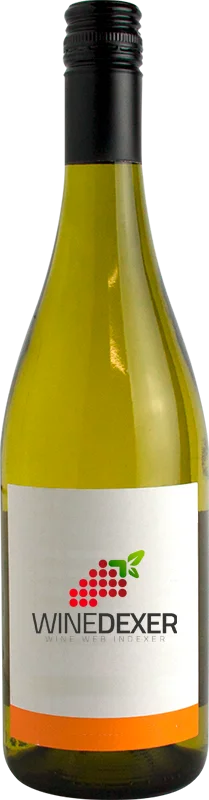
Winery Flavigny AlésiaAuxerrois
 White wine



This wine generally goes well with
Details and technical informations about Winery Flavigny Alésia's Auxerrois.
Discover the grape variety: Auxerrois
Auxerrois is a white grape variety native to Lorraine, which is also found in Alsace and in the Loire Valley, where it took off in 1950. Its name comes from the nurseries in Auxerre where it found refuge during the Second World War. Often called Pinot Auxerrois, it is part of the Moselle, Alsace and Côtes-de-Toul AOC grape varieties. Auxerrois should not be confused with côt or malbec, which are red grape varieties from the Cahors region and which may bear the same name. The bunches of Auxerrois are of medium size with small berries. It is a semi-late grape variety whose buds only come out when temperatures are well above 10°C. Auxerrois wines are characterized by finesse and acidity and subtle aromas of exotic fruits, fruits and white flowers. In France, it represents 1,600 hectares of production and some small parcels of Auxerrois are also present in Luxembourg, Germany, Canada and South Africa (2,300 hectares in total).
Last vintages of this wine
The best vintages of Auxerrois from Winery Flavigny Alésia are 2014, 2015
Informations about the Winery Flavigny Alésia
The Winery Flavigny Alésia is one of of the world's greatest estates. It offers 24 wines for sale in the of Coteaux de l'Auxois to come and discover on site or to buy online.

The wine region of Coteaux de l'Auxois
Coteaux de l'Auxois is a PGI title covering an area of land in the western Part of the Côte d'Or department in eastern France. The list of authorised Grape varieties is fairly Short and focuses - perhaps not surprisingly - on the traditional Burgundy varieties. While Pinot Noir and Chardonnay dominate, Melon de Bourgogne, Gamay, Pinot Gris and Aligoté are all allowed in the wines. A range of wine styles are produced here, from light, immediate drinking wines to slightly richer wines that can be aged.
The word of the wine: Performance
Quantity of grapes harvested per hectare. In AOC, the average yield is limited on the proposal of the appellation syndicate, validated by the Inao. The use of high-performance plant material (especially clones) and better control of vine diseases have increased yields. This is not without consequences on the quality of the wines (dilution) and on the state of the market (too much wine). We must not over-simplify: low yields are not synonymous with quality, and it is often in years with generous harvests that we find the greatest vintages (1982 and 1986 in Bordeaux, 1996 in Champagne, 1990 and 2005 in Burgundy...).