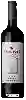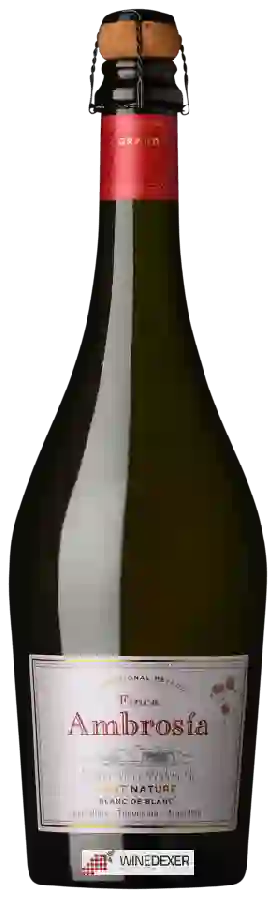
Winery Finca AmbrosiaBlanc de Blanc Brut Nature
 wine
wine
This wine generally goes well with
The Blanc de Blanc Brut Nature of the Winery Finca Ambrosia is in the top 0 of wines of Gualtallary.
Details and technical informations about Winery Finca Ambrosia's Blanc de Blanc Brut Nature.
Discover the grape variety: Jaoumet
Its origin is uncertain, but it is thought to have been introduced into the Agly valley by a Trappist monk in the mid-19th century. Jaoumet is practically unknown in other French table grape-producing regions, although it is listed in the Official Catalogue of Table Grape Varieties, list A1.
Last vintages of this wine



The best vintages of Blanc de Blanc Brut Nature from Winery Finca Ambrosia are 0
Informations about the Winery Finca Ambrosia
The Winery Finca Ambrosia is one of of the world's great estates. It offers 16 wines for sale in the of Gualtallary to come and discover on site or to buy online.

The wine region of Gualtallary
The wine region of Gualtallary is located in the region of Uco Valley of Mendoza of Argentina. Wineries and vineyards like the Domaine El Enemigo or the Domaine PerSe produce mainly wines red, white and pink. The most planted grape varieties in the region of Gualtallary are Malbec, Cabernet franc and Cabernet-Sauvignon, they are then used in wines in blends or as a single variety. On the nose of Gualtallary often reveals types of flavors of cherry, earthy or microbio and sometimes also flavors of tropical fruit, citrus fruit or tree fruit.
The wine region of Mendoza
Mendoza is by far the largest wine region in Argentina. Located on a high-altitude plateau at the edge of the Andes Mountains, the province is responsible for roughly 70 percent of the country's annual wine production. The French Grape variety Malbec has its New World home in the vineyards of Mendoza, producing red wines of great concentration and intensity. The province Lies on the western edge of Argentina, across the Andes Mountains from Chile.
The word of the wine: Performance
Quantity of grapes harvested per hectare. In AOC, the average yield is limited on the proposal of the appellation syndicate, validated by the Inao. The use of high-performance plant material (especially clones) and better control of vine diseases have increased yields. This is not without consequences on the quality of the wines (dilution) and on the state of the market (too much wine). We must not over-simplify: low yields are not synonymous with quality, and it is often in years with generous harvests that we find the greatest vintages (1982 and 1986 in Bordeaux, 1996 in Champagne, 1990 and 2005 in Burgundy...).