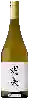
Winery Faustino Rivero UleciaChitón Rioja
 Red wine


In the mouth this red wine is a powerful with a nice balance between acidity and tannins.
This wine generally goes well with poultry, beef or veal.
Taste structure of the Chitón Rioja from the Winery Faustino Rivero Ulecia
Light | Bold | |
Smooth | Tannic | |
Dry | Sweet | |
Soft | Acidic |
In the mouth the Chitón Rioja of Winery Faustino Rivero Ulecia in the region of Rioja is a powerful with a nice balance between acidity and tannins.
Wine flavors and olphactive analysis

Food and wine pairings with Chitón Rioja
Pairings that work perfectly with Chitón Rioja



Original food and wine pairings with Chitón Rioja

The Chitón Rioja of Winery Faustino Rivero Ulecia matches generally quite well with dishes of beef, lamb or veal such as recipes of pork chops with potatoes, tanjia (lamb shoulder confit) or veal paupiettes with cider.
Details and technical informations about Winery Faustino Rivero Ulecia's Chitón Rioja.
Discover the grape variety: Gros Bourgogne
A very old grape variety that has been cultivated for a long time in Italy and Switzerland (cantons of Valais and Vaud), and is now clearly on the way out. In these countries, it still exists in the vineyards in the form of isolated strains... in France, it is completely unknown and yet it bears the name of a French wine region. According to A.D.N. analyses (J.F. Vouillamoz), its parents include white gouais, furmint, harslevelu, savagnin blanc, sylvaner, etc.
Last vintages of this wine
The best vintages of Chitón Rioja from Winery Faustino Rivero Ulecia are 2009, 2016, 2017, 2008 and 2014.
Informations about the Winery Faustino Rivero Ulecia
The Winery Faustino Rivero Ulecia is one of of the world's great estates. It offers 93 wines for sale in the of Rioja to come and discover on site or to buy online.

The wine region of Rioja
Rioja, in northern Spain, is best known for its berry-flavored, barrel-aged red wines made from Tempranillo and Garnacha. It is probably the leading wine region in Spain. It is certainly the most famous, rivaling only Jerez. The Vineyards follow the course of the Ebro for a hundred kilometres between the towns of Haro and Alfaro.
The word of the wine: Sweet (flavor)
The flavour provided by the residual sugars naturally present in the wine as well as by certain alcohols. This sensation can range from a simple impression of smoothness to a clear sweetness. We speak of roundness, fatness and mellowness.