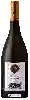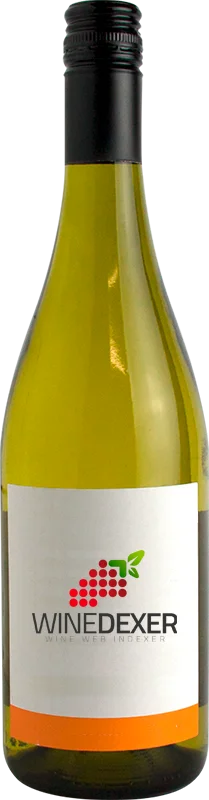
Winery FalconeSauvignon Blanc
 White wine



This wine generally goes well with vegetarian, rich fish (salmon, tuna etc) or shellfish.
Food and wine pairings with Sauvignon Blanc
Pairings that work perfectly with Sauvignon Blanc



Original food and wine pairings with Sauvignon Blanc
The Sauvignon Blanc of Winery Falcone matches generally quite well with dishes of rich fish (salmon, tuna etc), shellfish or vegetarian such as recipes of salmon steaks with lentils, pasta with vongoles (flat clams) or nanie's diced ham quiche.
Details and technical informations about Winery Falcone's Sauvignon Blanc.
Discover the grape variety: Cornichon blanc
A very old variety that has been multiplied in many Mediterranean wine-producing countries, due to the fact that its grapes ripen quite late. It is only in Italy and Greece that it still occupies a significant area. In France, it is only found among amateur gardeners and/or collectors. By its foliage in particular, the white gherkin is different from the purple gherkin this last one is given as very little sensitive to the grey rot.
Last vintages of this wine
The best vintages of Sauvignon Blanc from Winery Falcone are 0, 2019
Informations about the Winery Falcone
The Winery Falcone is one of of the world's greatest estates. It offers 2 wines for sale in the of Central Valley to come and discover on site or to buy online.

The wine region of Central Valley
The Central Valley (El Valle Central) of Chile is one of the most important wine-producing areas in South America in terms of Volume. It is also one of the largest wine regions, stretching from the Maipo Valley (just south of Santiago) to the southern end of the Maule Valley. This is a distance of almost 250 miles (400km) and covers a number of Climate types. The Central Valley wine region is easily (and often) confused with the geological Central Valley, which runs north–south for more than 620 miles (1000km) between the Pacific Coastal Ranges and the lower Andes.
The word of the wine: Reduction
A physiological and chemical phenomenon that occurs in wine in the absence of oxygen. The smell of reduction is characterized by animal and sometimes fetid notes that disappear in principle with aeration. It is recommended to decant reduced wines.