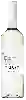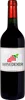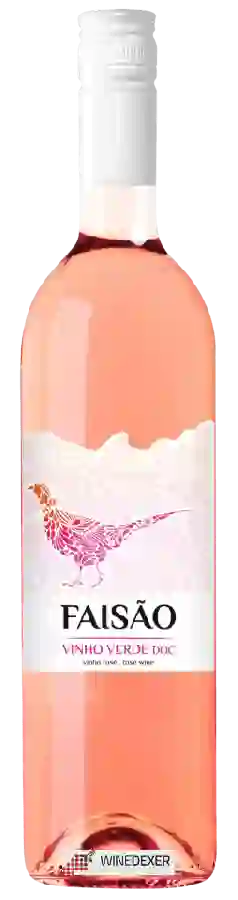
Winery FaisãoRosé
 Pink wine



This wine generally goes well with
Wine flavors and olphactive analysis


On the nose the Rosé of Winery Faisão in the region of Minho often reveals types of flavors of non oak, citrus fruit or red fruit and sometimes also flavors of floral.
Details and technical informations about Winery Faisão's Rosé.
Discover the grape variety: Muscat cendré
Muscat cendré blanc is a grape variety that originated in France (Languedoc). It produces a variety of grape specially used for wine making. It is rare to find this grape to eat on our tables. Muscat cendré white can be found in several vineyards: South-West, Cognac, Bordeaux, Loire valley, Jura, Champagne, Provence & Corsica, Rhône valley, Savoie & Bugey, Beaujolais, Languedoc & Roussillon.
Last vintages of this wine
The best vintages of Rosé from Winery Faisão are 2016, 2017, 0, 2014 and 2018.
Informations about the Winery Faisão
The Winery Faisão is one of of the world's greatest estates. It offers 12 wines for sale in the of Vinho Verde to come and discover on site or to buy online.

The wine region of Vinho Verde
The wine region of Vinho Verde is located in the region of Minho of Portugal. We currently count 535 estates and châteaux in the of Vinho Verde, producing 1615 different wines in conventional, organic and biodynamic agriculture. The wines of Vinho Verde go well with generally quite well with dishes .
The wine region of Minho
Minho is Portugal's Northernmost wine region. It is known for one wine style above all others: crisp, light, white Vinho Verde, whose DOC zone covers the same territory. The Minho name is used for the area's Vinho Regional designation (similar to the French IGP). The latter's looser production laws allow more diversity in the average winery's portfolio, including red and rosé wines.
The word of the wine: Draft liquor (champagne)
After blending, the wine is bottled with a liqueur de tirage (a mixture of sugar and wine) and a yeast (selected yeasts). The yeast attacks the sugar and creates carbon dioxide. The fermentation, which lasts about two months, is prolonged by an ageing period (15 months minimum in total). The bottle is capped (some rare vintages are capped with a staple and a cork).