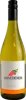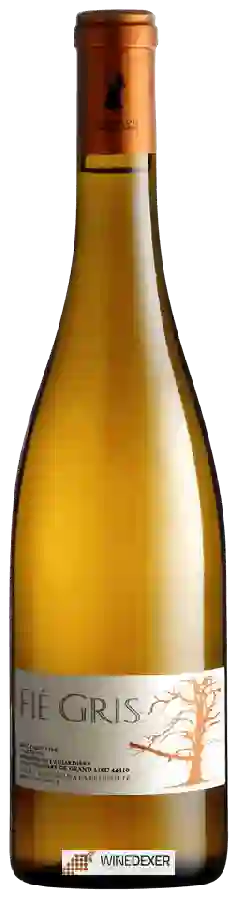
Winery Éric ChevalierFié Gris
 White wine



This wine generally goes well with
Wine flavors and olphactive analysis


On the nose the Fié Gris of Winery Éric Chevalier in the region of Loire Valley often reveals types of flavors of grapefruit, apricot or tree fruit and sometimes also flavors of spices, citrus fruit.
Details and technical informations about Winery Éric Chevalier's Fié Gris.
Discover the grape variety: Côt
Ribs have travelled a long way! In the Middle Ages it was indeed cultivated in the Yonne region. In Bordeaux, it was used in the production of vins clairets and was present in the Loire Valley where today it is only used in the AOC Touraine and Rosé d'Anjou. It goes by different names: Malbec in Bordeaux or Auxerrois in Cahors, in the Quercy vineyards, where it flourishes.it is a very old red grape variety with medium-sized bunches and berries with melting, juicy and sweet flesh. Very sensitive to frost, disease and temperature changes, it is very productive if preserved and if it reaches a good maturity.côt is used in the vineyards of several major appellations such as the AOC Médoc, Graves, Saint-Emilion, Pomerol, Bergerac, Pécharmant, Buzet, Malepère, Marcillac... Wines made from this grape variety are fruity, tannic, deep in colour and have good ageing potential Cultivated on a surface of 5.000 hectares in France, the côt is also very present in Argentina and Chile.
Last vintages of this wine
The best vintages of Fié Gris from Winery Éric Chevalier are 2016, 2015, 2013, 2014
Informations about the Winery Éric Chevalier
The Winery Éric Chevalier is one of of the world's greatest estates. It offers 20 wines for sale in the of Loire Valley to come and discover on site or to buy online.

The wine region of Loire Valley
The Loire Valley is a key wine region in western France. It follows the course of the Loire River on its Long journey through the heart of France, from the inland hills of the Auvergne to the plains of the French Atlantic coast near Nantes (Muscadet country). Important in terms of quantity and quality, the region produces large quantities (about 4 million h/l each year) of everyday wines, as well as some of France's greatest wines. Diversity is another of the region's major assets; the styles of wine produced here range from the light, tangy Muscadet to the Sweet, honeyed Bonnezeaux, the Sparkling whites of Vouvray and the juicy, Tannic reds of Chinon and Saumur.
The word of the wine: Barrel
Unit of measure for the transport and marketing of bulk wines, corresponding to 4 barrels of 225 l, i.e. 900 l.