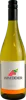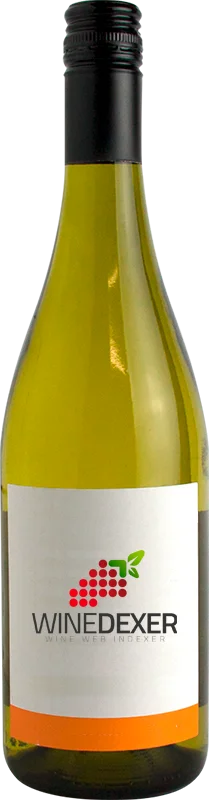
Winery Edoardo MiroglioSauvignon Blanc
 White wine



This wine generally goes well with vegetarian, rich fish (salmon, tuna etc) or shellfish.
Wine flavors and olphactive analysis




On the nose the Sauvignon Blanc of Winery Edoardo Miroglio in the region of Thracian Valley often reveals types of flavors of earth, tree fruit or spices and sometimes also flavors of citrus fruit, tropical fruit.
Food and wine pairings with Sauvignon Blanc
Pairings that work perfectly with Sauvignon Blanc



Original food and wine pairings with Sauvignon Blanc
The Sauvignon Blanc of Winery Edoardo Miroglio matches generally quite well with dishes of rich fish (salmon, tuna etc), shellfish or vegetarian such as recipes of sliced tuna with tomato sauce, cataplana with seafood or quiche with bacon and gruyère cheese.
Details and technical informations about Winery Edoardo Miroglio's Sauvignon Blanc.
Discover the grape variety: Flame seedless
Apyrene variety of table grapes obtained in 1961 in the United States (California) by John H. Weinberger and F.N. Harmon by complex crossing between (cardinal x sultanin) x [(molinera gorda x tifafihi ahmer ) x (muscat of Alexandria x sultanin)] and put in culture in 1973. It should be noted that the white Fresno seedless is the result of the same cross made by the same breeders. It can be found in Australia, Chile, Argentina, South Africa, Morocco, Tunisia, Spain, Portugal, Italy, Bulgaria, the United States (California) where it occupies a large area, etc. In France it is practically unknown, although it is registered in the Official Catalogue of table grape varieties, list A2.
Last vintages of this wine
The best vintages of Sauvignon Blanc from Winery Edoardo Miroglio are 2018, 2016, 2012, 0 and 2019.
Informations about the Winery Edoardo Miroglio
The Winery Edoardo Miroglio is one of of the world's great estates. It offers 37 wines for sale in the of Thracian Valley to come and discover on site or to buy online.

The word of the wine: Tertiary aromas
Aromas resulting from the aging of the wine in the bottle. The aromas evolve with time, from fresh fruitiness to notes of stewed, candied or dried fruit, to aromas of venison or undergrowth.