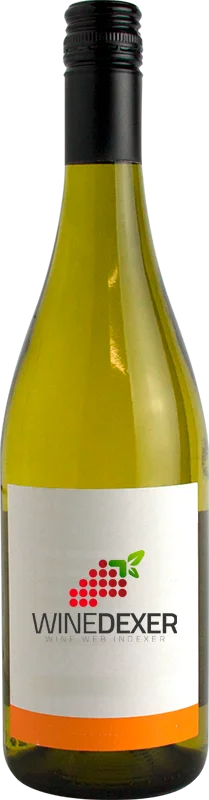
Weingut Schmidt 1753Grauer Burgunder Trocken
 White wine


In the mouth this white wine is a .
This wine generally goes well with pork, cured meat or mushrooms.
Taste structure of the Grauer Burgunder Trocken from the Weingut Schmidt 1753
Light | Bold | |
Dry | Sweet | |
Soft | Acidic |
In the mouth the Grauer Burgunder Trocken of Weingut Schmidt 1753 in the region of Nahe is a .
Food and wine pairings with Grauer Burgunder Trocken
Pairings that work perfectly with Grauer Burgunder Trocken


Original food and wine pairings with Grauer Burgunder Trocken

The Grauer Burgunder Trocken of Weingut Schmidt 1753 matches generally quite well with dishes of pork, spicy food or mushrooms such as recipes of roast pork orloff, daube niçoise or slow-cooked veal roast.
Details and technical informations about Weingut Schmidt 1753's Grauer Burgunder Trocken.
Discover the grape variety: Chancellor
Cross between 5163 Seibel (2 Gaillard x 2510 Seibel) and 880 Seibel (28112 Couderc x 2003 Seibel) obtained by Albert Seibel (1844-1936). It was the first direct-producing hybrid cultivated in France and has now practically disappeared. It can still be found in a few old vines in the form of isolated strains. It can be found in the United States (New York, etc.) and in Canada, where it is part of the grape varieties grown on a large number of vineyards.
Last vintages of this wine
The best vintages of Grauer Burgunder Trocken from Weingut Schmidt 1753 are 0
Informations about the Weingut Schmidt 1753
The Weingut Schmidt 1753 is one of of the world's great estates. It offers 46 wines for sale in the of Nahe to come and discover on site or to buy online.

The wine region of Nahe
Nahe is one of the smaller German wine regions, named after the Nahe river which joins the Rhein at Rheinhessen/bingen">Bingen. The viticultural carea here is characterised by dramatic topography with steep slopes and craggy outcrops of metamorphic rock. Like most of the regions on or near the Rhine, its most prestigious wines are made from Riesling. There are around 4,000 hectares (10,000 acres) of Vineyards, spread across seven Grosslagen (wine districts) and over 300 Einzellagen (individual vineyard sites).
The word of the wine: Noble rot
A fungus called botrytis cinerea that develops during the over-ripening phase, an ally of great sweet white wines, when it concentrates the juice of the berries. It requires the humidity of morning fogs and beautiful sunny days, gives musts very rich in sugar and brings to the wines the famous taste of "roasted".