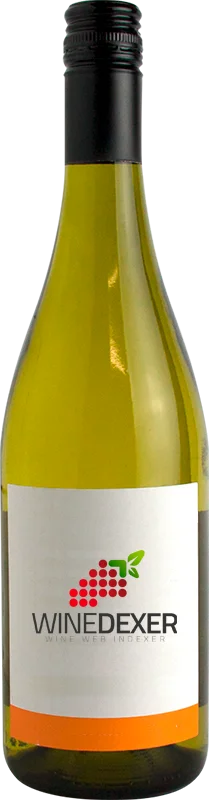
Weingut RomerhofBlanc de Noir Trocken
 White wine
This wine generally goes well with vegetarian
Food and wine pairings with Blanc de Noir Trocken
Pairings that work perfectly with Blanc de Noir Trocken

Original food and wine pairings with Blanc de Noir Trocken
The Blanc de Noir Trocken of Weingut Romerhof matches generally quite well with dishes of vegetarian such as recipes of quiche without pastry, courgette and blue cheese.
Details and technical informations about Weingut Romerhof's Blanc de Noir Trocken.
Discover the grape variety: Raffiat de Moncade
Raffiat de Moncade is a white Pyrenean grape variety. A descendant of the white gouais, it should not be confused with the arruffiac. This grape variety has truncated cone-shaped bunches of grapes, which are stalked and winged. The raffiat de Moncade was used by the ampelographer Marcel Durquety to obtain new varieties such as perdea, arroba and arriloba. Still called rousselet, the raffiat de Moncade is associated with an early budding in the year and a late maturity of the second period. It has a semi-spreading habit. This variety is quite productive and resists grey rot and powdery mildew quite well. Raffiat de Moncade is used in the vinification of certain wines from Tursan and Béarn. It is used to produce a neutral, fine, high alcohol and warm wine. It is often combined with petit manseng and gros manseng, which give the wines a high acidity.
Informations about the Weingut Romerhof
The Weingut Romerhof is one of of the world's greatest estates. It offers 21 wines for sale in the of Pfalz to come and discover on site or to buy online.

The wine region of Pfalz
Pfalz is a key wine producing region in western Germany, located between the Rhein/Rhine river and the low-lying Haardt mountain range (a natural continuation of the Alsatian Vosges). It covers a rectangle of land 45 miles (75km) Long and 15 miles (25km) wide. To the NorthLiesRheinhessen; to the South, the French border and Alsace. In terms of both quality and quantity, Pfalz is one of Germany's most important regions, and one which shows great promise for the future.
The word of the wine: Venaison
Applied to the bouquet of a wine reminiscent of the smell of big game.