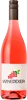
Domaine TaillandierCuvée Élégance Rosé de Loire
 Pink wine
This wine generally goes well with
Details and technical informations about Domaine Taillandier's Cuvée Élégance Rosé de Loire.
Discover the grape variety: Nebbiolo
A very old grape variety grown in the Italian Piedmont. It has a great resemblance with the Freisa, which also comes from the same Italian region. Among the various massal selections made in Italy, we find lampia, michet and rosé. It can be found in Italy, Austria, Bulgaria, Cyprus, Greece, Mexico, the United States (California), Australia, etc. In France, it is practically unknown, perhaps because it is a delicate and demanding grape variety with, among other things, a fairly long phenological cycle.
Informations about the Domaine Taillandier
The Domaine Taillandier is one of of the world's greatest estates. It offers 8 wines for sale in the of Rosé de Loire to come and discover on site or to buy online.

The wine region of Rosé de Loire
Rosé de Loire is a Dry rosé wine. It falls into the category of still wine. Rosé de Loire is produced in the vineyards of the Loire region, in the west of France and more precisely in the wine regions of Anjou-Saumur and Touraine. Administratively, Rosé de Loire can be produced in the departments of Maine-et-Loire, Indre-et-Loire, Loir-et-Cher, Deux-Sèvres and Vienne.
The wine region of Loire Valley
The Loire Valley is a key wine region in western France. It follows the course of the Loire River on its Long journey through the heart of France, from the inland hills of the Auvergne to the plains of the French Atlantic coast near Nantes (Muscadet country). Important in terms of quantity and quality, the region produces large quantities (about 4 million h/l each year) of everyday wines, as well as some of France's greatest wines. Diversity is another of the region's major assets; the styles of wine produced here range from the light, tangy Muscadet to the Sweet, honeyed Bonnezeaux, the Sparkling whites of Vouvray and the juicy, Tannic reds of Chinon and Saumur.
The word of the wine: Blanc de blancs (champagne)
Champagne made only from the Chardonnay grape. The expression has been somewhat overused by the intensive use made of it by certain large distributors of white table wines (or sparkling wines) who were thus seeking to promote their product.