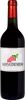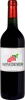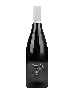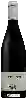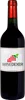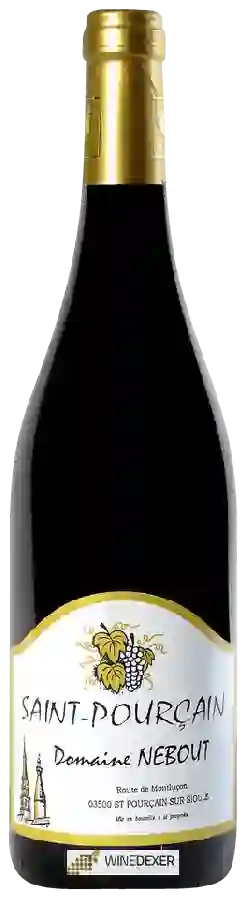
Domaine NeboutRouge
 Red wine


This wine generally goes well with beef

Food and wine pairings with Rouge
Pairings that work perfectly with Rouge

Original food and wine pairings with Rouge
The Rouge of Domaine Nebout matches generally quite well with dishes of beef such as recipes of beef fashion.
Details and technical informations about Domaine Nebout's Rouge.
Discover the grape variety: Gamay noir
Light, juicy reds, low in tannins with crunchy freshness, showing aromas of wild strawberry, raspberry, banana (from carbonic maceration) and peony. Easy-drinking style of Beaujolais Nouveau, more structured and mineral on the granites of the ten crus (Morgon, Moulin-à-Vent, Fleurie, Brouilly). Also in Touraine, Auvergne and Swiss Romande. A Burgundian variety, a cross of Pinot Noir × Gouais Blanc.
Last vintages of this wine

The best vintages of Rouge from Domaine Nebout are 2016, 2015, 2013, 2012 and 2011.
Informations about the Domaine Nebout
The Domaine Nebout is one of of the world's greatest estates. It offers 16 wines for sale in the of Saint-Pourçain to come and discover on site or to buy online.

The wine region of Saint-Pourçain
AOC of Auvergne, Loire satellite (elevated AOC 2009, 600 ha across 19 communes): Tressallier (local Sacy) signature as king white with Chardonnay and Sauvignon — signature profile lively, saline and nervy with citrus and minerality, texture close to Aligoté or Melon. Gamay (40-75%) and Pinot Noir (25-60%) signature blend as king red — hybrid Beaujolais-Burgundy profile with cherry, raspberry and delicate spices. Gamay alone for fresh, crunchy rosés.
The wine region of Loire Valley
Kingdom of lively, dry whites and fine sparklers. Mineral, taut Sauvignon Blanc (Sancerre, Pouilly-Fumé) with citrus and gunflint notes. Multiform Chenin Blanc (Vouvray, Savennières, Layon): straight dry, floral off-dry or noble sweet honey-quince. Saline, iodised Muscadet (Melon B.
The word of the wine: Pressing Rosé
A method of making rosé wine that consists of pressing the grapes directly after crushing and light skin maceration. The resulting wine is lively, light and pale.