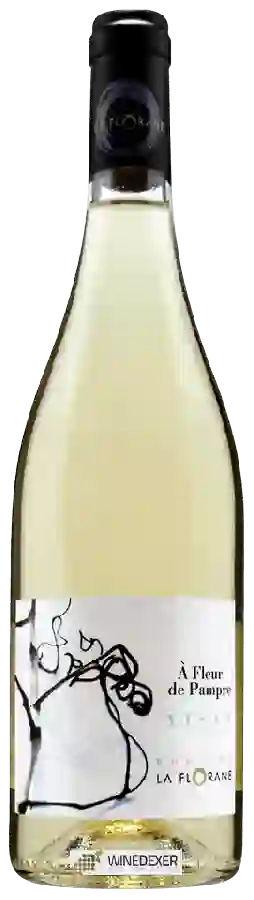
Domaine La FloraneÀ Fleur de Pampre Blanc
 White wine



This wine is a blend of 2 varietals which are the Marsanne and the Viognier.
In the mouth this white wine is a powerful.
This wine generally goes well with pork, poultry or rich fish (salmon, tuna etc).
The À Fleur de Pampre Blanc of the Domaine La Florane is in the top 10 of wines of Côtes-du-Rhône-Villages 'Visan'.

Taste structure of the À Fleur de Pampre Blanc from the Domaine La Florane
Light | Bold | |
Dry | Sweet | |
Soft | Acidic |
In the mouth the À Fleur de Pampre Blanc of Domaine La Florane in the region of Rhone Valley is a powerful.
Wine flavors and olphactive analysis

On the nose the À Fleur de Pampre Blanc of Domaine La Florane in the region of Rhone Valley often reveals types of flavors of peach, earth or tree fruit.
Food and wine pairings with À Fleur de Pampre Blanc
Pairings that work perfectly with À Fleur de Pampre Blanc



Original food and wine pairings with À Fleur de Pampre Blanc


The À Fleur de Pampre Blanc of Domaine La Florane matches generally quite well with dishes of pork, rich fish (salmon, tuna etc) or mature and hard cheese such as recipes of turkey stuffed with chestnuts, quiche with leeks and fresh salmon from flo or italian stuffed chicken.
Details and technical informations about Domaine La Florane's À Fleur de Pampre Blanc.
Discover the grape variety: Marsanne
Rich, structured whites with a round palate and long finish, with aromas of ripe yellow fruits, honey, white flowers, toasted almond and mineral notes. Fine ageing potential, developing waxy and truffle nuances with age. Key variety in the great whites of the northern Rhône (Hermitage, Crozes-Hermitage, Saint-Joseph, Saint-Péray) blended with roussanne. Also exported to Australia (Victoria) and California. Native Rhône variety.
Last vintages of this wine
The best vintages of À Fleur de Pampre Blanc from Domaine La Florane are 2019, 2017, 2016, 2015 and 2018.
Informations about the Domaine La Florane
The Domaine La Florane is one of of the world's greatest estates. It offers 23 wines for sale in the of Côtes-du-Rhône-Villages 'Visan' to come and discover on site or to buy online.

The wine region of Côtes-du-Rhône-Villages 'Visan'
The wine region of Côtes-du-Rhône-Villages 'Visan' is located in the region of Côtes-du-Rhône-Villages of Rhone Valley of France. Wineries and vineyards like the Domaine La Florane or the Domaine La Florane produce mainly wines red, white and pink. The most planted grape varieties in the region of Côtes-du-Rhône-Villages 'Visan' are Mourvèdre, Viognier and Roussanne, they are then used in wines in blends or as a single variety. On the nose of Côtes-du-Rhône-Villages 'Visan' often reveals types of flavors of cherry, raspberry or tree fruit and sometimes also flavors of blackberry, red fruit or strawberries.
The wine region of Rhone Valley
France's 2nd-largest AOC vineyard, two complementary worlds. Northern: pure Syrah in signature reds (Côte-Rôtie, Hermitage, Cornas), deep and peppery with blackberry, violet, black olive and smoked bacon notes, exceptional ageing. Opulent Viognier whites (Condrieu, apricot, flowers) and ample Marsanne-Roussanne. Southern: sun-soaked Grenache blends at Châteauneuf, Gigondas, Vacqueyras (candied fruit, garrigue).
The word of the wine: Bordeaux futures
Bordeaux wines are expected 2 to 3 years before bottling. In the spring following the harvest, the wines are offered by the châteaux to the Bordeaux wine merchants via the brokers.