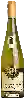
Domaine des Pierres MeslieresJean Claude Toublanc Coteaux D'Ancenis Malvoisie
 White wine



This wine generally goes well with
Details and technical informations about Domaine des Pierres Meslieres's Jean Claude Toublanc Coteaux D'Ancenis Malvoisie.
Discover the grape variety: Isa
Crossing obtained in 1964 between the gloria hungariae or glory of Hungary (Hungarian millennium X muscatel Thalloczy Lajos) by the cardinal. The Isa is registered since 1996 in the Official Catalogue of table grape varieties list A1.
Last vintages of this wine
The best vintages of Jean Claude Toublanc Coteaux D'Ancenis Malvoisie from Domaine des Pierres Meslieres are 2018
Informations about the Domaine des Pierres Meslieres
The Domaine des Pierres Meslieres is one of of the world's greatest estates. It offers 1 wines for sale in the of Pays Nantais to come and discover on site or to buy online.

The wine region of Pays Nantais
The Pays Nantais is the region surrounding the city of Nantes, on the Atlantic coast of Brittany, France. The region covers an area of about 90 kilometres from east to west, between neighbouring Anjou and the Atlantic coast. Most of the production produces light, fresh white wines. The most famous of these is undoubtedly Muscadet, where the melon">Melon de Bourgogne grape dominates the plantings.
The wine region of Loire Valley
The Loire Valley is a key wine region in western France. It follows the course of the Loire River on its Long journey through the heart of France, from the inland hills of the Auvergne to the plains of the French Atlantic coast near Nantes (Muscadet country). Important in terms of quantity and quality, the region produces large quantities (about 4 million h/l each year) of everyday wines, as well as some of France's greatest wines. Diversity is another of the region's major assets; the styles of wine produced here range from the light, tangy Muscadet to the Sweet, honeyed Bonnezeaux, the Sparkling whites of Vouvray and the juicy, Tannic reds of Chinon and Saumur.
The word of the wine: Removal of shoes
In the spring, this operation consists of removing the mound of earth formed at the foot of the vines by ploughing between the rows in the autumn.