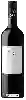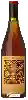
Domaine de la DéesseVin De Pays Du Var
 Red wine
This wine generally goes well with
Details and technical informations about Domaine de la Déesse's Vin De Pays Du Var.
Discover the grape variety: Oberlin noir
Interspecific crossing between riparia Millardet and gamay obtained by Philip Christian Oberlin (1831-1915) who also created in 1897 the Oberlin Viticultural Institute in Colmar (Haut Rhin). This direct-producing hybrid was widely multiplied in the northeast region of France, from Alsace to Burgundy, also in the Loire Valley and in the Centre where our photographs were taken. Today, Oberlin noir is practically no longer cultivated, but a few vines exist here and there, producing very pleasant, albeit atypical, wines. It is nevertheless registered in the Official Catalogue of Vine Varieties, list A1. - Synonymy: 595 Oberlin (for all the synonyms of the grape varieties, click here!).
Informations about the Domaine de la Déesse
The Domaine de la Déesse is one of wineries to follow in Vin de Pays.. It offers 3 wines for sale in the of Vin de Pays to come and discover on site or to buy online.

The wine region of Vin de Pays
Vin de Pays (VDP), the French national equivalent of PGI (Protected Geographical Indication) at the European level, is a quality category of French wines, positioned between Vin de Table (VDT) and Appellation d'Origine Contrôlée (AOC). This layer of the French appellation system was initially introduced in September 1968 by the INAO, the official appellation authority. It underwent several early revisions in the 1970s, followed by substantial changes in September 2000 and again in 2009, when all existing VDT titles were automatically registered with the European Union as PGI. Producers retain the choice of using either the VDP or PGI titles on their labels, or both - in the form "IGP-Vin de Pays".
The wine region of Pays d'Oc
Pays d'Oc is the PGI for red, white and rosé wines that are produced over a wide area of the southern coast of France. The PGI catchment area corresponds roughly to the Languedoc-roussillon">Languedoc-Roussillon wine region, one of the largest wine regions in France. The area covers all wines that are not produced under the strict laws that govern AOC-level appellations in the regions: among them, Corbières, Minervois and the Languedoc appellation itself. The Pays d'Oc PGI is arguably the most important in France, producing the majority of the country's PGI wines.
The word of the wine: Hybrid
Term designating grape varieties obtained from two different vine species.