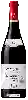
Winery Daniel CarronBeaujolais Vieilles Vignes
 Red wine
In the mouth this red wine is a with a nice freshness.
This wine generally goes well with pork, poultry or veal.
Taste structure of the Beaujolais Vieilles Vignes from the Winery Daniel Carron
Light | Bold | |
Smooth | Tannic | |
Dry | Sweet | |
Soft | Acidic |
In the mouth the Beaujolais Vieilles Vignes of Winery Daniel Carron in the region of Beaujolais is a with a nice freshness.
Food and wine pairings with Beaujolais Vieilles Vignes
Pairings that work perfectly with Beaujolais Vieilles Vignes



Original food and wine pairings with Beaujolais Vieilles Vignes

The Beaujolais Vieilles Vignes of Winery Daniel Carron matches generally quite well with dishes of pasta, veal or pork such as recipes of meat and goat pie, caramelized lamb mice or cassoulet of yesteryear.
Details and technical informations about Winery Daniel Carron's Beaujolais Vieilles Vignes.
Discover the grape variety: Etraire de l'Aduï
Would be finding its first origins in the valley of Isere, one would have indeed found it in the Mas de l'Aduï in Saint Ismier. We find a certain resemblance with the Persian. Today its multiplication in nurseries is very weak, registered however with the official Catalogue of the varieties of vine list A1 under the name of Etraire de la Dui.
Informations about the Winery Daniel Carron
The Winery Daniel Carron is one of of the world's greatest estates. It offers 4 wines for sale in the of Beaujolais to come and discover on site or to buy online.

The wine region of Beaujolais
Beaujolais is an important wine region in eastern France, famous for its vibrant, Fruity red wines made from Gamay. It is located immediately South of Burgundy, of which it is sometimes considered a Part, although it is in the administrative region of Rhône. The extensive plantings of Gamay in this region make Beaujolais one of the few regions in the world that is so concentrated on a single Grape variety. Pinot Noir is used in small quantities in red and rosé wines, but in the name of regional identity, it is being phased out and will only be allowed until the 2015 harvest.
The word of the wine: Nose
In tasting, this is the second phase, which consists of identifying the wine's aromas and possibly its defects.