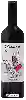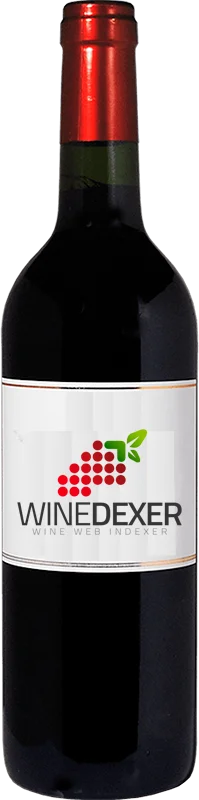
Winery ControventoArsenio & Zazà
 Red wine


In the mouth this red wine is a .
This wine generally goes well with poultry, beef or veal.
Taste structure of the Arsenio & Zazà from the Winery Controvento
Light | Bold | |
Smooth | Tannic | |
Dry | Sweet | |
Soft | Acidic |
In the mouth the Arsenio & Zazà of Winery Controvento in the region of Abruzzo is a .
Food and wine pairings with Arsenio & Zazà
Pairings that work perfectly with Arsenio & Zazà



Original food and wine pairings with Arsenio & Zazà

The Arsenio & Zazà of Winery Controvento matches generally quite well with dishes of beef, pasta or veal such as recipes of oxtail and carrot stew, marco's pasta with bacon or veal tagine with carrots.
Details and technical informations about Winery Controvento's Arsenio & Zazà.
Discover the grape variety: Cabernet-Sauvignon
Cabernet-Sauvignon noir is a grape variety that originated in France (Bordeaux). It produces a variety of grape specially used for wine making. It is rare to find this grape to eat on our tables. This variety of grape is characterized by small bunches, and small grapes. Cabernet-Sauvignon noir can be found in many vineyards: South-West, Loire Valley, Languedoc & Roussillon, Cognac, Bordeaux, Armagnac, Rhone Valley, Provence & Corsica, Savoie & Bugey, Beaujolais.
Last vintages of this wine
The best vintages of Arsenio & Zazà from Winery Controvento are 0
Informations about the Winery Controvento
The Winery Controvento is one of of the world's great estates. It offers 18 wines for sale in the of Abruzzo to come and discover on site or to buy online.

The wine region of Abruzzo
Abruzzo is an Italian wine region located on the eastern (Adriatic) coast. Its immediate neighbors in CentralItaly are Marche to the North, Lazio to the west and southwest and Molise to the southeast. Abruzzo has one DOCG - Montepulciano d'Abruzzo Colline Teramane - and three DOC wine appellations. The reds and Cerasuolo d'Abruzzo and Montepulciano d'Abruzzo, as well as the white wine appellation Trebbiano d'Abruzzo are the most notable, followed by the lesser-known Controguerra.
The word of the wine: Phenolic ripeness
A distinction is made between the ripeness of sugars and acids and the ripeness of tannins and other compounds such as anthocyanins and tannins, which will bring structure and colour. Grapes can be measured at 13° potential without having reached this phenolic maturity. Vinified at this stage, they will give hard, astringent wines, without charm.