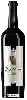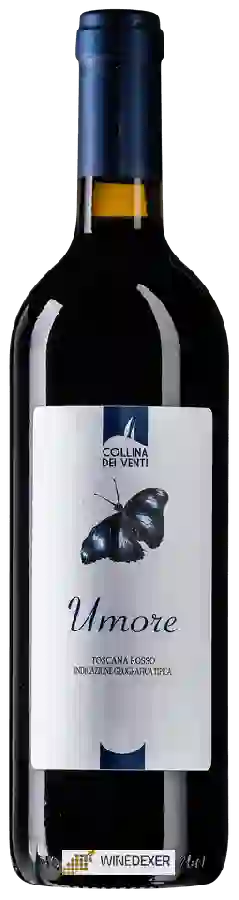
Winery Collina dei VentiUmore
 Red wine
In the mouth this red wine is a powerful with a lot of tannins present in the mouth.
This wine generally goes well with poultry, beef or veal.
The Umore of the Winery Collina dei Venti is in the top 10 of wines of Tuscany.

Taste structure of the Umore from the Winery Collina dei Venti
Light | Bold | |
Smooth | Tannic | |
Dry | Sweet | |
Soft | Acidic |
In the mouth the Umore of Winery Collina dei Venti in the region of Tuscany is a powerful with a lot of tannins present in the mouth.
Food and wine pairings with Umore
Pairings that work perfectly with Umore



Original food and wine pairings with Umore


The Umore of Winery Collina dei Venti matches generally quite well with dishes of beef, lamb or veal such as recipes of beef miroton, lamb curry or osso bucco of veal.
Details and technical informations about Winery Collina dei Venti's Umore.
Discover the grape variety: Sangiovese
Firm, upright reds with precise acidity and angular tannins, showing aromas of sour cherry, plum, dried herbs, leather, black tea and balsamic notes. Characteristically bitter, savoury finish. Star of Chianti Classico DOCG, Brunello di Montalcino DOCG, Vino Nobile di Montepulciano DOCG and Morellino di Scansano. Italy's most planted variety, a descendant of Ciliegiolo × Calabrese di Montenuovo.
Informations about the Winery Collina dei Venti
The Winery Collina dei Venti is one of of the world's greatest estates. It offers 4 wines for sale in the of Tuscany to come and discover on site or to buy online.

The wine region of Tuscany
Kingdom of Sangiovese: upright reds with cherry, plum, dried herbs and leather, lively acidity and firm tannins. Fleshy, food-friendly Chianti Classico DOCG, deep long-ageing Brunello di Montalcino (spice, tobacco, ripe black fruit), elegant Vino Nobile di Montepulciano. On the coast, Bolgheri crafts the opulent Cabernet- and Merlot-based 'Super Tuscans'. Some fresh white Vernaccia.
The word of the wine: Draft liquor (champagne)
After blending, the wine is bottled with a liqueur de tirage (a mixture of sugar and wine) and a yeast (selected yeasts). The yeast attacks the sugar and creates carbon dioxide. The fermentation, which lasts about two months, is prolonged by an ageing period (15 months minimum in total). The bottle is capped (some rare vintages are capped with a staple and a cork).