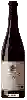
Clos Puy ArnaudLe Rouge de Puy Arnaud
 Red wine



In the mouth this red wine is a powerful with a nice balance between acidity and tannins.
This wine generally goes well with
Taste structure of the Le Rouge de Puy Arnaud from the Clos Puy Arnaud
Light | Bold | |
Smooth | Tannic | |
Dry | Sweet | |
Soft | Acidic |
In the mouth the Le Rouge de Puy Arnaud of Clos Puy Arnaud in the region of Vin de France is a powerful with a nice balance between acidity and tannins.
Wine flavors and olphactive analysis




On the nose the Le Rouge de Puy Arnaud of Clos Puy Arnaud in the region of Vin de France often reveals types of flavors of earth, vegetal or spices and sometimes also flavors of black fruit, floral.
Details and technical informations about Clos Puy Arnaud's Le Rouge de Puy Arnaud.
Discover the grape variety: Bondola noire
An ancient grape variety cultivated in Italy, where it originated and is almost no longer multiplied, unknown in France as in most other wine-producing countries. It should not be confused with Bondoletta, a cross between Bondola Noire and Completer, and with the red prié called Bonda in Valle d'Aosta - Italy - (José F. Vouillamoz and Giulio Moriondo), which has almost disappeared from the vineyards today, and which is not related to Bondola Noire. Note that the white Bondola - very rare - is not the white form.
Last vintages of this wine
The best vintages of Le Rouge de Puy Arnaud from Clos Puy Arnaud are 2022, 2020, 0, 2019
Informations about the Clos Puy Arnaud
The Clos Puy Arnaud is one of of the world's greatest estates. It offers 10 wines for sale in the of Vin de France to come and discover on site or to buy online.

The wine region of Vin de France
Vin de France is the most basic level of quality for wines from France. These are generally uncomplicated everyday drinks - most often blends, but perhaps also Varietal wines based on a well-known Grape variety such as Cabernet Sauvignon, Merlot, Chardonnay or Sauvignon Blanc. Wines from France are those that do not meet the criteria stipulated by the Protected Designation of Origin (PDO) or Protected Geographical Indication (PGI) laws (see information on French wine labels). This may be because the vineyards are outside the delimited production areas or because the grape varieties or winemaking techniques used do not conform to the rules of the local appellations.
The word of the wine: Muscaté
Wine reminiscent of the characteristic aromas of fresh muscat grapes.