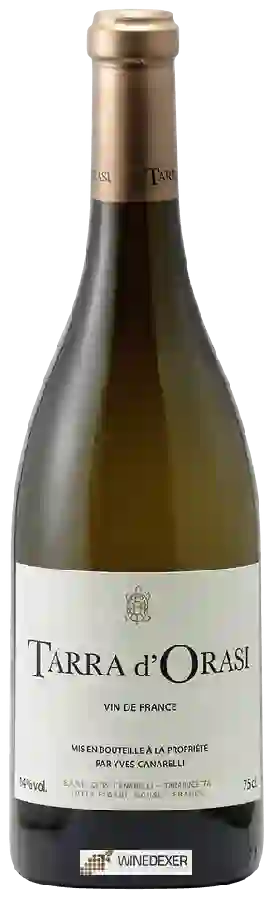
Clos CanarelliTarra d'Orasi Blanc
 White wine


This wine is a blend of 2 varietals which are the Biancu gentile and the Vermentino.
This wine generally goes well with
The Tarra d'Orasi Blanc of the Clos Canarelli is in the top 80 of wines of Corsica.
Wine flavors and olphactive analysis

Details and technical informations about Clos Canarelli's Tarra d'Orasi Blanc.
Discover the grape variety: Biancu gentile
Biancu Gentile white is a grape variety that originated in France (Corsica). It produces a variety of grape specially used for the elaboration of wine. It is rare to find this grape to eat on our tables. This variety of grape is characterized by large bunches and large grapes. Biancu Gentile white can be found in several vineyards: South-West, Cognac, Bordeaux, Provence & Corsica, Rhone Valley, Loire Valley, Savoie & Bugey, Beaujolais.
Last vintages of this wine
The best vintages of Tarra d'Orasi Blanc from Clos Canarelli are 2011
Informations about the Clos Canarelli
The Clos Canarelli is one of of the world's greatest estates. It offers 20 wines for sale in the of Corsica to come and discover on site or to buy online.

The wine region of Corsica
Corsica is an island in the Mediterranean Sea, located between the southeast coast of Provence and the west coast of Tuscany. Although it is closer to Italy, Corsica has been under French rule since 1769 and is one of the 26 regions of France. The island's Italian origins are evident in its wines, which are mainly made from the classic Italian Grapes Vermentino and Sangiovese (known here as Rolle and Nielluccio respectively). Despite its remoteness, Corsican winemakers have amassed an impressive and diverse portfolio of grape varieties - there are very few places on earth where Pinot Noir, Tempranillo and Barbarossa grow side by side.
The word of the wine: Clear
Said of a wine that is clear and brilliant in colour and contains no suspended matter.