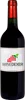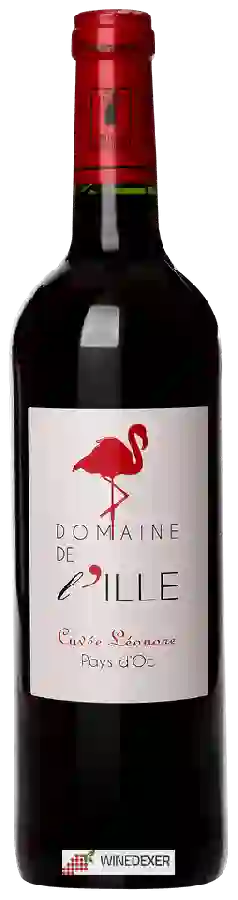
Château de l'IlleCuvée Leonore
 Red wine


In the mouth this red wine is a powerful with a nice balance between acidity and tannins.
This wine generally goes well with beef, veal or pasta.

Taste structure of the Cuvée Leonore from the Château de l'Ille
Light | Bold | |
Smooth | Tannic | |
Dry | Sweet | |
Soft | Acidic |
In the mouth the Cuvée Leonore of Château de l'Ille in the region of Pays d'Oc is a powerful with a nice balance between acidity and tannins.
Food and wine pairings with Cuvée Leonore
Pairings that work perfectly with Cuvée Leonore



Original food and wine pairings with Cuvée Leonore
The Cuvée Leonore of Château de l'Ille matches generally quite well with dishes of beef, pasta or veal such as recipes of flemish beer stew, chicken lasagna or rabbit with hunter's sauce.
Details and technical informations about Château de l'Ille's Cuvée Leonore.
Discover the grape variety: Chinuri
Lively, structured dry whites with a pale golden hue, a lean palate and sharp acidity, with delicate notes of citrus (lemon, grapefruit), green apple, pear, white flowers, fresh herbs and minerals. Also a pillar of Georgia's great traditional-method sparkling wines. Star of Kartli, often vinified in qvevri (buried clay jars). Native Georgian variety for dry and sparkling whites.
Informations about the Château de l'Ille
The Château de l'Ille is one of of the world's greatest estates. It offers 21 wines for sale in the of Pays d'Oc to come and discover on site or to buy online.

The wine region of Pays d'Oc
The single-grape IGP par excellence: modern, accessible, frank and fruity wines, the popular signature of the Midi. Spicy Syrah reds (pepper, blackberry), round Merlot, structured Cabernet, generous Grenache, supple Cinsault. Crisp, tangy rosés. Opulent Chardonnay whites, lively Sauvignon, floral, apricoty Viognier.
The word of the wine: Herbaceous
Vegetable odour reminiscent of freshly cut grass and considered a defect of the wine.