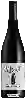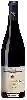
Château Saint BaulerySaint-Chinian
 Red wine


In the mouth this red wine is a powerful with a nice balance between acidity and tannins.
This wine generally goes well with beef, veal or pasta.
Taste structure of the Saint-Chinian from the Château Saint Baulery
Light | Bold | |
Smooth | Tannic | |
Dry | Sweet | |
Soft | Acidic |
In the mouth the Saint-Chinian of Château Saint Baulery in the region of Languedoc-Roussillon is a powerful with a nice balance between acidity and tannins.
Wine flavors and olphactive analysis

Food and wine pairings with Saint-Chinian
Pairings that work perfectly with Saint-Chinian



Original food and wine pairings with Saint-Chinian
The Saint-Chinian of Château Saint Baulery matches generally quite well with dishes of beef, pasta or veal such as recipes of roasted fillet of beef with parsley, fish with tamarind or veal chop normandy style.
Details and technical informations about Château Saint Baulery's Saint-Chinian.
Discover the grape variety: Carla
Intraspecific crossing between the Cardinal and the Alphonse Lavallée obtained in 1958, variety registered in 1989 in the Official Catalogue of table grape varieties list A1.
Last vintages of this wine

The best vintages of Saint-Chinian from Château Saint Baulery are 2010, 2015, 2014, 2013 and 2012.
Informations about the Château Saint Baulery
The Château Saint Baulery is one of of the world's greatest estates. It offers 3 wines for sale in the of Saint-Chinian to come and discover on site or to buy online.

The wine region of Saint-Chinian
Saint-Chinian is an appellation in the Languedoc-roussillon">Languedoc-Roussillon wine region of southern France. It is located between Minervois and Faugeres, which produce similar styles of robust red wine from similar grapes and in a similar landscape. It is also adjacent to the Muscat de Saint-Jean-de-Minervois appellation, which produces Sweet white wines. Therefore, the diversity of the Languedoc region is well demonstrated in this small area.
The wine region of Languedoc-Roussillon
Languedoc (formerly Coteaux du Languedoc) is a key appellation used in the Languedoc-Roussillon wine region of southern France. It covers Dry table wines of all three colors (red, white and rosé) from the entire region, but leaves Sweet and Sparkling wines to other more specialized appellations. About 75% of all Languedoc wines are red, with the remaining 25% split roughly down the middle between whites and rosés. The appellation covers most of the Languedoc region and almost a third of all the vineyards in France.
The word of the wine: Ugni blanc
White grape variety of Italian origin, and the main white variety grown in France. Its large bunches give fine, light and lively wines, suitable for distillation: today it is the main variety for making cognac and armagnac. Ugni blanc, which is a little richer in alcohol when grown in Mediterranean regions, is used in the blending of the Provence and Corsica appellations, often in association with other grape varieties that bring aromas and structure, such as clairette, grenache blanc or sauvignon. Ugni blanc is also used, on a secondary basis, in the production of certain white wines in Gironde (AOC Bordeaux, Entre-deux-Mers, etc.).