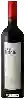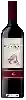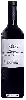
Château RichelieuCuvée Cantelouve Fronsac
 Red wine
This wine generally goes well with poultry, beef or game (deer, venison).
Food and wine pairings with Cuvée Cantelouve Fronsac
Pairings that work perfectly with Cuvée Cantelouve Fronsac



Original food and wine pairings with Cuvée Cantelouve Fronsac

The Cuvée Cantelouve Fronsac of Château Richelieu matches generally quite well with dishes of beef, lamb or game (deer, venison) such as recipes of kig ar farz breton, rack of lamb in a crust of herbs and seeds with thyme juice and... or alice's rabbit.
Details and technical informations about Château Richelieu's Cuvée Cantelouve Fronsac.
Discover the grape variety: Altesse
The Altesse white grape variety is French in origin, but its ancestors were brought from Cyprus. It then developed in the vineyards of the southeast of the country. The Montagnieu fusette or arbane, as it is also called, buds early in the year. A cottony veil covers the first buds. The involuted blade and the U-shaped petiolar sinus distinguish the adult, three-lobed leaves. During, sometimes for late vengeance, the clusters of medium or small size are winged, compact and cylindrical.the fruits reveal a melting pulp under a film of variable color. The pink-tan colour replaces the early reddish yellow when the berries ripen. If they persist, the berries take on a lilac hue. The vinification promises sparkling, aromatic and elegant sweet whites, or dry whites. Altesse is a grape variety to be carefully maintained against acariosis and erinosis.
Informations about the Château Richelieu
The Château Richelieu is one of of the world's greatest estates. It offers 5 wines for sale in the of Libournais to come and discover on site or to buy online.

The wine region of Libournais
Rich in world-renowned wines, such as Saint-Emilion Grands Crus and Bordeaux/libournais/pomerol">Pomerol, the Libourne region Lies on the right bank of the Dordogne, on the edge of the Périgord. The region takes its name from the port city of Libourne, where many merchants from the Correze settled in the early 19th century. But its jewel is the small medieval city of Saint-Emilion, listed as a Unesco World Heritage Site and one of the most famous showcases of the Bordeaux wine region. The region is very homogeneous due to its hilly landscapes, its geology (predominantly limestone subsoil), the concentration of vineyards and the importance of family-run, small or medium-sized estates, which contrast with the large Medoc-type estates.
The wine region of Bordeaux
Bordeaux, in southwestern France, is one of the most famous, prestigious and prolific wine regions in the world. The majority of Bordeaux wines (nearly 90% of the production Volume) are the Dry, medium and Full-bodied red Bordeaux blends for which it is famous. The finest (and most expensive) are the wines of the great châteaux of Haut-Médoc and the right bank appellations of Saint-Émilion and Pomerol. The former focuses (at the highest level) on Cabernet Sauvignon, the latter on Merlot.
The word of the wine: Nouaison
Phase of the vegetative cycle of the vine following flowering and corresponding to the formation of the grape berry.