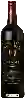
Château La Grave de BertinCuvée Héritage Bordeaux
 Red wine


In the mouth this red wine is a powerful with a nice balance between acidity and tannins.
This wine generally goes well with poultry, beef or veal.
Taste structure of the Cuvée Héritage Bordeaux from the Château La Grave de Bertin
Light | Bold | |
Smooth | Tannic | |
Dry | Sweet | |
Soft | Acidic |
In the mouth the Cuvée Héritage Bordeaux of Château La Grave de Bertin in the region of Bordeaux is a powerful with a nice balance between acidity and tannins.
Food and wine pairings with Cuvée Héritage Bordeaux
Pairings that work perfectly with Cuvée Héritage Bordeaux



Original food and wine pairings with Cuvée Héritage Bordeaux

The Cuvée Héritage Bordeaux of Château La Grave de Bertin matches generally quite well with dishes of beef, veal or game (deer, venison) such as recipes of barbecued prime rib with coarse salt, chicken bonne femme or rack of lamb with herbs.
Details and technical informations about Château La Grave de Bertin's Cuvée Héritage Bordeaux.
Discover the grape variety: Cabernet-Dorsa
Intraspecific cross between the limberger and the dornfelder made in 1971 by Bernard Hill of the Weinsberg Research Institute in Germany. It can be found in the Netherlands, Germany, Belgium, Switzerland, Poland, the Czech Republic and the United States. Note that Cabernet Dorio has the same parents.
Last vintages of this wine

The best vintages of Cuvée Héritage Bordeaux from Château La Grave de Bertin are 2011, 2010
Informations about the Château La Grave de Bertin
The Château La Grave de Bertin is one of of the world's greatest estates. It offers 9 wines for sale in the of Bordeaux to come and discover on site or to buy online.

The wine region of Bordeaux
Bordeaux, in southwestern France, is one of the most famous, prestigious and prolific wine regions in the world. The majority of Bordeaux wines (nearly 90% of the production Volume) are the Dry, medium and Full-bodied red Bordeaux blends for which it is famous. The finest (and most expensive) are the wines of the great châteaux of Haut-Médoc and the right bank appellations of Saint-Émilion and Pomerol. The former focuses (at the highest level) on Cabernet Sauvignon, the latter on Merlot.
The word of the wine: Malolactic fermentation
Called second fermentation or malo for short. It is the degradation (under the effect of bacteria) of the malic acid naturally present in the wine into milder, less aggressive lactic acid. Some producers or wineries refuse this operation by "blocking the malo" (by cold and adding SO2) to keep a maximum of acidity which carries the aromas and accentuates the sensation of freshness.