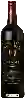
Château Camille GaucheraudHommage
 Red wine
In the mouth this red wine is a powerful with a nice balance between acidity and tannins.
This wine generally goes well with poultry, beef or veal.

Taste structure of the Hommage from the Château Camille Gaucheraud
Light | Bold | |
Smooth | Tannic | |
Dry | Sweet | |
Soft | Acidic |
In the mouth the Hommage of Château Camille Gaucheraud in the region of Bordeaux is a powerful with a nice balance between acidity and tannins.
Food and wine pairings with Hommage
Pairings that work perfectly with Hommage



Original food and wine pairings with Hommage

The Hommage of Château Camille Gaucheraud matches generally quite well with dishes of beef, veal or game (deer, venison) such as recipes of pork shoulder with mustard, veal roast casserole or roast pork confit.
Details and technical informations about Château Camille Gaucheraud's Hommage.
Discover the grape variety: Forastera
Lively, fresh dry whites with a pale golden robe, a slender palate and preserved acidity. Signature aromas of citrus (lemon, grapefruit), white flowers, white-fleshed fruits (green apple) and volcanic mineral notes from the Canaries. Refreshing Atlantic profile. Grown on small plots in the Canary Islands, contributing to Spain's Atlantic wine identity. Native Spanish and Portuguese white grape of the Canaries and Galicia (Forastera Blanca).
Informations about the Château Camille Gaucheraud
The Château Camille Gaucheraud is one of of the world's greatest estates. It offers 9 wines for sale in the of Bordeaux to come and discover on site or to buy online.

The wine region of Bordeaux
World-renowned age-worthy reds, led by round Merlot (plum, black fruit) or firm Cabernet Sauvignon (blackcurrant, cedar, graphite), blended with Cabernet Franc and Petit Verdot for tannic structure. Structured Médoc and Graves, velvety Saint-Émilion and Pomerol. Also crisp dry whites (Sauvignon/Sémillon) and opulent sweet Sauternes with honey and candied fruit. A 110,000 ha Gironde vineyard, 65 appellations, cradle of the 1855 classified growths.
The word of the wine: Retrieved from
Wine that has lost its aromatic potential after prolonged aeration.