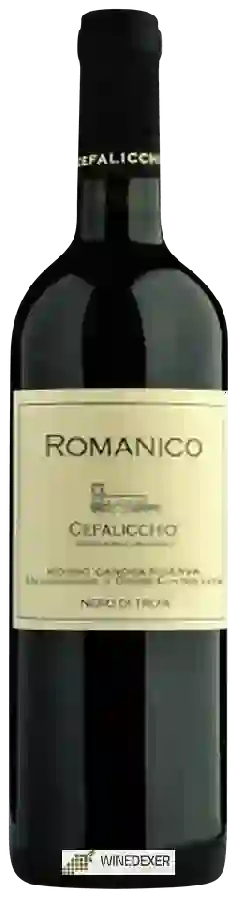
Winery CefalicchioRomanico Nero di Troia Rosso Canosa Riserva
 Red wine



In the mouth this red wine is a powerful.
This wine generally goes well with beef, lamb or pasta.

Taste structure of the Romanico Nero di Troia Rosso Canosa Riserva from the Winery Cefalicchio
Light | Bold | |
Smooth | Tannic | |
Dry | Sweet | |
Soft | Acidic |
In the mouth the Romanico Nero di Troia Rosso Canosa Riserva of Winery Cefalicchio in the region of Puglia is a powerful.
Wine flavors and olphactive analysis



On the nose the Romanico Nero di Troia Rosso Canosa Riserva of Winery Cefalicchio in the region of Puglia often reveals types of flavors of non oak, oak.
Food and wine pairings with Romanico Nero di Troia Rosso Canosa Riserva
Pairings that work perfectly with Romanico Nero di Troia Rosso Canosa Riserva



Original food and wine pairings with Romanico Nero di Troia Rosso Canosa Riserva
The Romanico Nero di Troia Rosso Canosa Riserva of Winery Cefalicchio matches generally quite well with dishes of beef, pasta or lamb such as recipes of southern beef meatballs, simple chinese noodle soup or leg of lamb with garlic and rosemary.
Details and technical informations about Winery Cefalicchio's Romanico Nero di Troia Rosso Canosa Riserva.
Discover the grape variety: Clarin
Simple and fresh dry whites, pale golden colour, supple mouth with moderate acidity, with understated aromas of citrus and white flowers. Discreet rustic profile. Preserved in a few ampelographic collections as a heritage variety, studied for its genetic and historical interest. Rare and poorly documented white grape grown in very small quantities.
Last vintages of this wine
The best vintages of Romanico Nero di Troia Rosso Canosa Riserva from Winery Cefalicchio are 2007, 2008, 0, 2009
Informations about the Winery Cefalicchio
The Winery Cefalicchio is one of of the world's greatest estates. It offers 10 wines for sale in the of Rosso Canosa to come and discover on site or to buy online.

The wine region of Rosso Canosa
DOC of northern Apulia (ancient city of Canosa di Puglia, original home of Nero di Troia). Nero di Troia (Uva di Troia, min. 65%): tannic, structured red with violet, blackberry, raspberry, plum, liquorice and a spiced-savoury edge — vivid ruby, rich polyphenols and tannins for ageing. Montepulciano and Sangiovese soften in blends.
The wine region of Puglia
Heel of the boot, 80% red vineyard, sunny and generous. Fleshy, jammy Primitivo (= Zinfandel) with notes of black cherry, plum, chocolate and spices, powerful alcohol and melted tannins, a star in Primitivo di Manduria. Deep, structured Negroamaro (black-bitter) with a bitter finish in Salice Salentino. Structured Nero di Troia, spicy Susumaniello.
The word of the wine: Grape variety
A type of vine plant and, by extension, the term used to designate the grapes that come from it. The term "table grape" is used to designate the grapes used for consumption, whereas the term "grape variety" is used to designate the wine grapes used to make wine.


