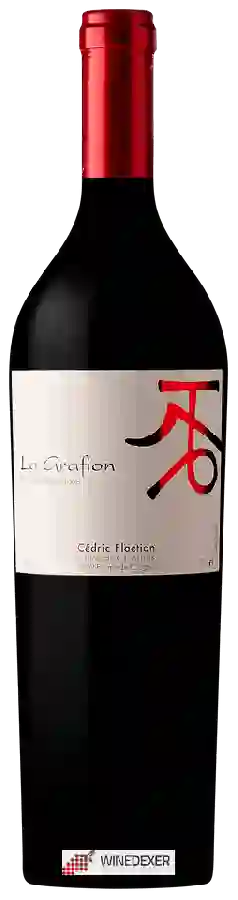
Winery Cedric FlactionLo Grafion
 Red wine


This wine is a blend of 2 varietals which are the Tempranillo and the Merlot.
This wine generally goes well with pork, beef or game (deer, venison).
The Lo Grafion of the Winery Cedric Flaction is in the top 70 of wines of Valais.

Wine flavors and olphactive analysis




On the nose the Lo Grafion of Winery Cedric Flaction in the region of Valais often reveals types of flavors of non oak, earth or microbio and sometimes also flavors of oak, spices or red fruit.
Food and wine pairings with Lo Grafion
Pairings that work perfectly with Lo Grafion



Original food and wine pairings with Lo Grafion


The Lo Grafion of Winery Cedric Flaction matches generally quite well with dishes of beef, lamb or pork such as recipes of beef bobotie, oven-baked lamb stew or endives au gratin without béchamel sauce.
Details and technical informations about Winery Cedric Flaction's Lo Grafion.
Discover the grape variety: Tempranillo
Elegant, structured reds with aromas of strawberry, cherry, plum, leather, blond tobacco and pronounced vanilla from long oak ageing. Ranges from Joven to Crianza, Reserva and Gran Reserva. Star of Rioja DOCa, Ribera del Duero DO and Toro DO, also shines in the Douro as Tinta Roriz/Aragonez. One of the world's most planted Spanish varieties.
Last vintages of this wine

The best vintages of Lo Grafion from Winery Cedric Flaction are 2015, 2014, 2011, 2012 and 0.
Informations about the Winery Cedric Flaction
The Winery Cedric Flaction is one of of the world's greatest estates. It offers 26 wines for sale in the of Valais to come and discover on site or to buy online.

The wine region of Valais
Switzerland's largest vineyard, capital of native grapes. Straight, precise alpine whites: light, floral Chasselas (Fendant), signature Petite Arvine with saline, grapefruit and rhubarb notes, rich, apricoty Amigne, mineral Humagne Blanche. Altitude reds: fine Pinot Noir, crisp Gamay, native Cornalin and Humagne Rouge, spicy and deep. Highly precise alpine age-worthy wines.
The word of the wine: Maceration
Prolonged contact and exchange between the juice and the grape solids, especially the skin. Not to be confused with the time of fermentation, which follows maceration. The juice becomes loaded with colouring matter and tannins, and acquires aromas. For a rosé, the maceration is short so that the colour does not "rise" too much. For white wines too, a "pellicular maceration" can be practised, which allows the wine to acquire more fat.


