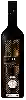
Winery Castillo Las AlmenasRed Blend
 Red wine


In the mouth this red wine is a powerful with a nice freshness.
This wine generally goes well with poultry, beef or veal.

Taste structure of the Red Blend from the Winery Castillo Las Almenas
Light | Bold | |
Smooth | Tannic | |
Dry | Sweet | |
Soft | Acidic |
In the mouth the Red Blend of Winery Castillo Las Almenas in the region of Valence is a powerful with a nice freshness.
Food and wine pairings with Red Blend
Pairings that work perfectly with Red Blend



Original food and wine pairings with Red Blend

The Red Blend of Winery Castillo Las Almenas matches generally quite well with dishes of beef, pasta or veal such as recipes of beef tongue in hot pickle sauce, pasta bolognese or veal shank in a pot au feu with star anise.
Details and technical informations about Winery Castillo Las Almenas's Red Blend.
Discover the grape variety: Faberrebe
Aromatic, fine whites with a pale golden robe, an airy palate with preserved acidity, and signature muscat, white flower (acacia, elderflower), white fruit (apple, pear) aromas with delicate floral notes. Also vinified as off-dry styles. Grown in the Rhine and Franconia regions for dry and off-dry aromatic whites. German white grape obtained in 1929 by Georg Scheu in Alzey (Weißburgunder × Müller-Thurgau).
Last vintages of this wine

The best vintages of Red Blend from Winery Castillo Las Almenas are 2018, 0
Informations about the Winery Castillo Las Almenas
The Winery Castillo Las Almenas is one of of the world's greatest estates. It offers 4 wines for sale in the of Valence to come and discover on site or to buy online.

The wine region of Valence
Sunny Mediterranean Levant, sun-drenched accessible wines. Monastrell (Mourvèdre) star red in Alicante: fleshy and deep with black fruits, garrigue, leather and spice, firm tannins. Round, fruity Bobal from Utiel-Requena, supple Garnacha, juicy Tempranillo. Fresh whites: light Merseguera, aromatic Moscatel (fresh grape, flowers).
The word of the wine: Clone
A vine propagated from a single specimen (by cuttings or grafting), as opposed to mass selection, which starts from a family of vines.