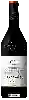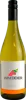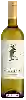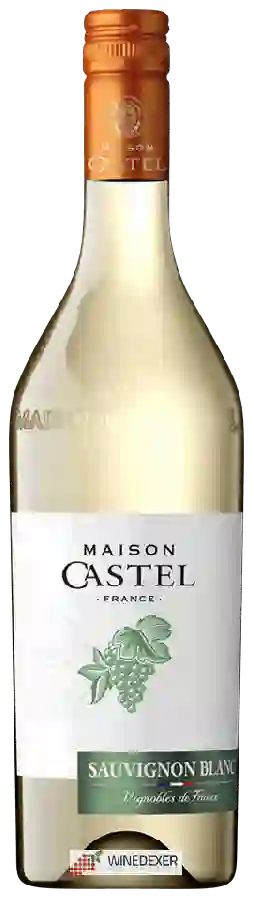
Winery CastelSauvignon Blanc
 White wine


This wine generally goes well with vegetarian, rich fish (salmon, tuna etc) or shellfish.

Wine flavors and olphactive analysis


On the nose the Sauvignon Blanc of Winery Castel in the region of Pays d'Oc often reveals types of flavors of citrus, gooseberry or vegetal and sometimes also flavors of tree fruit, spices or citrus fruit.
Food and wine pairings with Sauvignon Blanc
Pairings that work perfectly with Sauvignon Blanc



Original food and wine pairings with Sauvignon Blanc
The Sauvignon Blanc of Winery Castel matches generally quite well with dishes of rich fish (salmon, tuna etc), shellfish or vegetarian such as recipes of pasta with tuna, monkfish in foil or zucchini quiche.
Details and technical informations about Winery Castel's Sauvignon Blanc.
Discover the grape variety: Frontenac
Deeply coloured, fruity reds with a dense purple robe, supple tannins and firm acidity, with intense aromas of black cherry, plum, blackcurrant, blackberry and spicy notes. Also made as expressive rosés and ice wines (Frontenac Gris). An extremely cold-hardy interspecific variety (down to -35°C on the vine), producing wines in cold US states (Minnesota, Wisconsin, Vermont) and Canada (Quebec). Created in 1996 at the University of Minnesota.
Last vintages of this wine
The best vintages of Sauvignon Blanc from Winery Castel are 2017, 2015, 2016
Informations about the Winery Castel
The Winery Castel is one of of the world's great estates. It offers 114 wines for sale in the of Pays d'Oc to come and discover on site or to buy online.

The wine region of Pays d'Oc
The single-grape IGP par excellence: modern, accessible, frank and fruity wines, the popular signature of the Midi. Spicy Syrah reds (pepper, blackberry), round Merlot, structured Cabernet, generous Grenache, supple Cinsault. Crisp, tangy rosés. Opulent Chardonnay whites, lively Sauvignon, floral, apricoty Viognier.
The word of the wine: Bâtonnage
A very old technique that has come back into fashion in modern oenology, which consists of shaking the white wine in the barrels at the end of fermentation, or after fermentation, with a stick or a flail, in order to suspend the fine lees composed of yeasts at the end of their activity. This process is sometimes used for red wines.