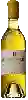
Domaine de CarbonnieuCuvée Léa Sauternes
 Sweet wine
This wine generally goes well with fruity desserts and blue cheese.
Food and wine pairings with Cuvée Léa Sauternes
Pairings that work perfectly with Cuvée Léa Sauternes

Original food and wine pairings with Cuvée Léa Sauternes
The Cuvée Léa Sauternes of Domaine de Carbonnieu matches generally quite well with dishes of fruity desserts or blue cheese such as recipes of tarte tatin or mussels with roquefort cheese.
Details and technical informations about Domaine de Carbonnieu's Cuvée Léa Sauternes.
Discover the grape variety: Dimiat
This variety is cultivated in practically all of Bulgaria, much more so in the region around the Black Sea. Among white varieties, it is still the most widely planted in this country, just ahead of rkatziteli. It is also found in the former Yugoslavia, Albania, Romania, Hungary, Turkey and Greece. It is believed to be the result of a natural intraspecific cross between coarna alba - a Romanian variety - and white gouais.
Informations about the Domaine de Carbonnieu
The Domaine de Carbonnieu is one of of the world's greatest estates. It offers 4 wines for sale in the of Sauternes to come and discover on site or to buy online.

The wine region of Sauternes
Sauternes, 65 km South of Bordeaux, is a Village renowned for its high quality Sweet wines. Although some wineries produce Dry wines, they sell them under other appellations than Sauternes, which is specific to sweet wines. The village is surrounded on all sides by vineyards, the best of which produce some of the most prestigious, long-lasting and expensive dessert wines in the world. A half bottle of premium, aged Sauternes from a good Vintage can sell for over $1,000.
The wine region of Bordeaux
Bordeaux, in southwestern France, is one of the most famous, prestigious and prolific wine regions in the world. The majority of Bordeaux wines (nearly 90% of the production Volume) are the Dry, medium and Full-bodied red Bordeaux blends for which it is famous. The finest (and most expensive) are the wines of the great châteaux of Haut-Médoc and the right bank appellations of Saint-Émilion and Pomerol. The former focuses (at the highest level) on Cabernet Sauvignon, the latter on Merlot.
The word of the wine: Amylic
Aroma reminiscent of banana, candy, and sometimes nail polish, particularly present in primeur wines. The amylic taste is reminiscent of the aromas of industrial confectionery and does not reflect a great expression of terroir.