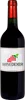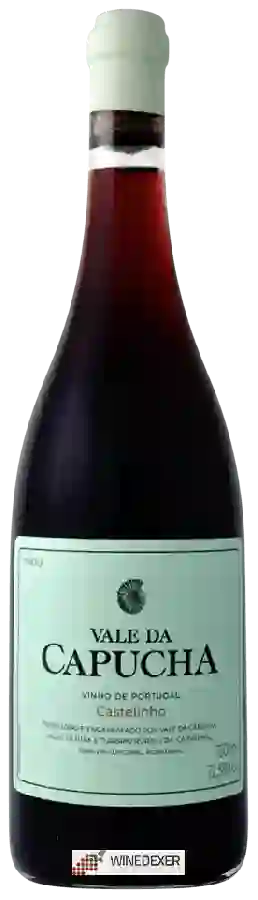
Winery CapuchaCastelinho
 Red wine


In the mouth this red wine is a powerful with a nice balance between acidity and tannins.
This wine generally goes well with poultry, beef or veal.

Taste structure of the Castelinho from the Winery Capucha
Light | Bold | |
Smooth | Tannic | |
Dry | Sweet | |
Soft | Acidic |
In the mouth the Castelinho of Winery Capucha in the region of Lisboa is a powerful with a nice balance between acidity and tannins.
Food and wine pairings with Castelinho
Pairings that work perfectly with Castelinho



Original food and wine pairings with Castelinho

The Castelinho of Winery Capucha matches generally quite well with dishes of beef, pasta or veal such as recipes of piglet shoulder with melting baked apples, pasta with lemon and comté cheese or veal axoa (basque country).
Details and technical informations about Winery Capucha's Castelinho.
Discover the grape variety: Galotta
Intensely coloured and structured reds with a deep purple robe, firm tannins and a dense mouthfeel, with aromas of black fruits (blackberry, blackcurrant, plum), cherry, spices and floral notes. A profile between Italian Ancellotta and French Gamay. Grown in Swiss Romandy (Vaud, Valais, Geneva) and Ticino for modern blends and identity cuvées. A Swiss hybrid created in 1981 at Pully by André Jaquinet (Ancellotta × Gamay), valued for its colour and resistance.
Last vintages of this wine
The best vintages of Castelinho from Winery Capucha are 2018, 0, 2017, 2015
Informations about the Winery Capucha
The Winery Capucha is one of of the world's greatest estates. It offers 24 wines for sale in the of Lisboa to come and discover on site or to buy online.

The wine region of Lisboa
Vast coastal IGP north of Lisbon, Portugal's largest producer by volume. Accessible, sun-filled reds: fruity, spicy Castelão, dense Touriga Nacional (black fruit, violet), fleshy Trincadeira, deep Alicante Bouschet. Fresh, mineral whites: straight, lemony Arinto (star of Bucelas), aromatic Fernão Pires, round Vital and Malvasia. Structured reds from Alenquer, sparkling at Óbidos.
The word of the wine: Tired
Wine that is too old, faded or has suffered from handling such as racking or bottling. In the first case it is too late, in the second case the wine must be put to rest for a few weeks in the cellar.