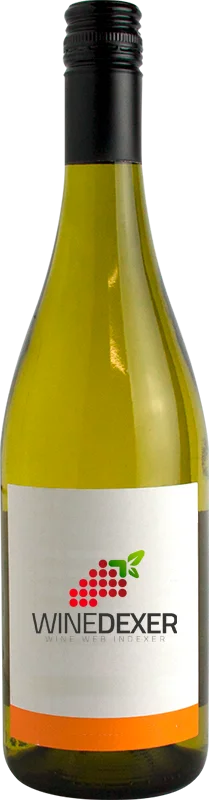
Winery Cantine LatiniRondinella
 White wine
This wine generally goes well with
Details and technical informations about Winery Cantine Latini's Rondinella.
Discover the grape variety: Müller-Thurgau
Müller-Thurgau shows the character of its noble origins. This Swiss white grape variety is a cross between the royal madeleine and the riesling. The idea that the latter was crossed with the sylvaner is irrelevant. The variety can be recognized by its vigorous character and its semi-erect habit. Preferring rich soils and short prunings, the plant sees its buds open quite early. The buds are cottony and soft green in color. The slightly embossed and tormented blade, with 5 to 7 lobes, makes it possible to distinguish the adult leaves. The clusters appear compact, pyramidal or cylindrical in shape and small to medium in size. The flavour of the Müller-Turgau berries is reminiscent of Muscat. The juicy and crunchy pulp is revealed under a greyish skin. When ripe, the fruit has a mottled shell on a golden yellow background. Switzerland prefers to extract the juice from this variety. The wine made from it is rather heavy and does not keep well.
Informations about the Winery Cantine Latini
The Winery Cantine Latini is one of of the world's greatest estates. It offers 17 wines for sale in the of Ticino to come and discover on site or to buy online.

The wine region of Ticino
Ticino is a relatively small wine region in the alpine South of Switzerland, prized for its Merlot, and located along its border with Italy. The wine region's borders follow those of the canton of Ticino, a primarily Italian-speaking enclave in the landlocked multilingual country (the canton is called "Tessin" by the French and German speakers). Vineyard">Vineyards in region cover just over 1,100 hectares (2,700 acres) and are centred around the rivers and large, alpine lakes of the canton. The latter are a major tourist attraction - much like the lake of Como, just 5km (3 miles) from Ticino's southernmost tip - and they all share water with Italy.
The word of the wine: Baco 22A
A white grape variety resulting from the hybridization of the folle blanche and the noah. It is the only hybrid to remain authorized in a French appellation vineyard, that of Armagnac, where it thrives in particular on the tawny sands of Bas-Armagnac. When distilled, its wine produces round, smooth and aromatic eaux-de-vie with hints of ripe fruit.