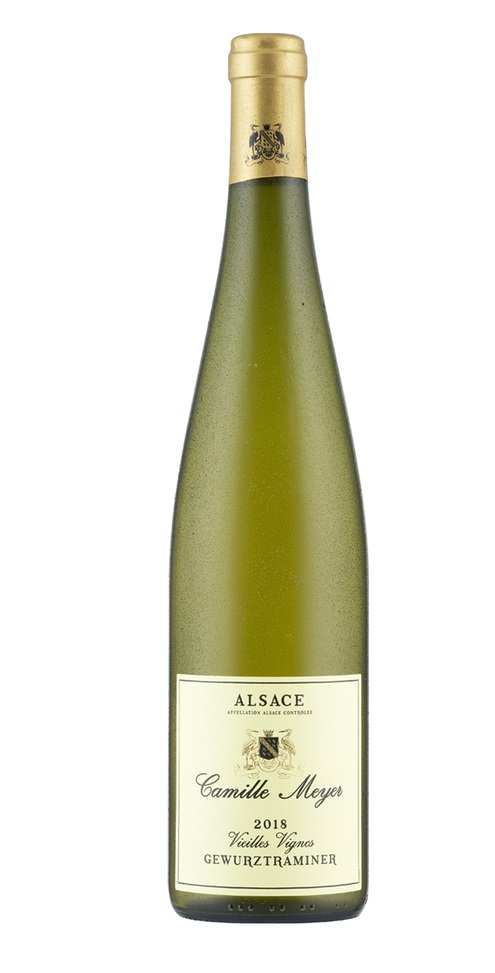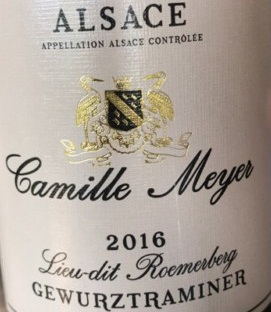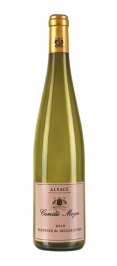
Winery Camille MeyerKlevener de Heiligenstein
 White wine


This wine generally goes well with lean fish and mild and soft cheese.
Food and wine pairings with Klevener de Heiligenstein
Pairings that work perfectly with Klevener de Heiligenstein


Original food and wine pairings with Klevener de Heiligenstein
The Klevener de Heiligenstein of Winery Camille Meyer matches generally quite well with dishes such as recipes .
Details and technical informations about Winery Camille Meyer's Klevener de Heiligenstein.
Discover the grape variety: Savagnin
Savagnin is a white grape variety originating from the Austrian Tyrol. It arrived in Franche Comté and quickly became the flagship variety of the Jura. Cousin of the gewurztraminer, it gives small white bunches. Its berries have a thick skin which resists well to grey rot and to diseases in general. Savagnin thrives on marl soils and is a very aromatic grape variety. It is used in the elaboration of yellow wine, the AOC Château-Châlon is the most representative. This grape variety also produces vin de paille which is a sweet wine for which the ripe grapes are dried on a bed of straw for at least 6 weeks before being pressed. The best known AOC straw wines are: Arbois, Côtes-du-Jura and Etoile. Savagnin is also used to make Macvin du Jura, a liqueur wine, and to make Crémants du Jura.White wines made from Savagnin have great aging potential. They have a powerful and complex aroma with notes of walnut, almonds, hazelnuts, flowers, honey and green apple.
Last vintages of this wine
The best vintages of Klevener de Heiligenstein from Winery Camille Meyer are 2018
Informations about the Winery Camille Meyer
The Winery Camille Meyer is one of of the world's greatest estates. It offers 17 wines for sale in the of Alsace to come and discover on site or to buy online.

The wine region of Alsace
Alsace, located in the extreme north-east of France, is Distinguished from other French wine regions by its strong Franco-Germanic influences. These influences are the result of a back-and-forth between the German and French sovereignties over the last few centuries. They can be seen not only in the architecture and culture of Alsace, but also in the wines. Alsace wines are produced under three main appellations: Alsace and Alsace Grand Cru for still white wines (Sweet and Dry), and Crémant d'Alsace for Sparkling wines.
The word of the wine: Botrytis cinerea
This fungus, also called noble rot, develops during the over-ripening phase and is an ally of great sweet white wines, when it concentrates the juice of the berries. It requires the humidity of morning fogs and beautiful sunny days, gives musts very rich in sugar and brings to the wines the famous taste of "roasted".