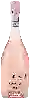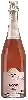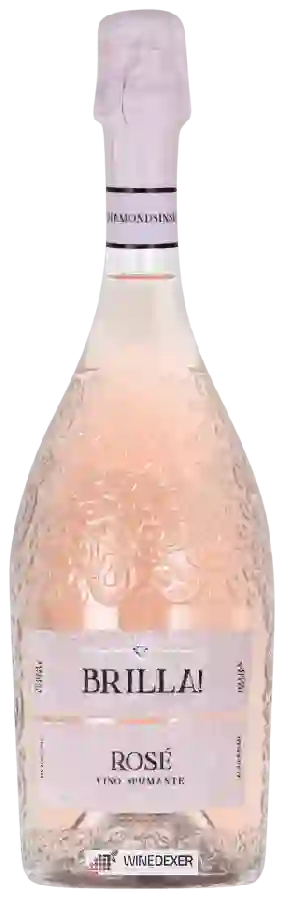
Winery BrillaSpumante Rosé
 Sparkling wine



This wine is a blend of 2 varietals which are the Glera and the Pinot noir.
This wine generally goes well with pork, poultry or veal.
Food and wine pairings with Spumante Rosé
Pairings that work perfectly with Spumante Rosé



Original food and wine pairings with Spumante Rosé


The Spumante Rosé of Winery Brilla matches generally quite well with dishes of veal, pork or game (deer, venison) such as recipes of sarthe pot, tomatoes stuffed with sausage meat or deer jig.
Details and technical informations about Winery Brilla's Spumante Rosé.
Discover the grape variety: Glera
It is said to be of Slovenian origin, where it is cultivated under the name of Prosekar, also known for a long time in Italy under the name of Glera. It should not be confused with prosecco lungo - although there is a family link - and prosecco nostrano, which is none other than Tuscany's malvasia. Note that Vitouska - another Italian grape variety - is the result of a natural intraspecific cross between Tuscan malvasia and Prosecco. Under the name of Glera, it is registered in the Official Catalogue of wine grape varieties list A. It can be found in practically all of the former Yugoslavia, and more surprisingly in Argentina, but is virtually unknown in France.
Last vintages of this wine
The best vintages of Spumante Rosé from Winery Brilla are 2019, 0
Informations about the Winery Brilla
The Winery Brilla is one of of the world's greatest estates. It offers 3 wines for sale in the of Veneto to come and discover on site or to buy online.

The wine region of Veneto
Veneto is an important and growing wine region in northeastern Italy. Veneto is administratively Part of the Triveneto area, aLong with its smaller neighbors, Trentino-Alto Adige and Friuli-Venezia Giulia. In terms of geography, culture and wine styles, it represents a transition from the Alpine and Germanic-Slavic end of Italy to the warmer, drier, more Roman lands to the South. Veneto is slightly smaller than the other major Italian wine regions - Piedmont, Tuscany, Lombardy, Puglia and Sicily - but it produces more wine than any of them.
The word of the wine: Maceration
Prolonged contact and exchange between the juice and the grape solids, especially the skin. Not to be confused with the time of fermentation, which follows maceration. The juice becomes loaded with colouring matter and tannins, and acquires aromas. For a rosé, the maceration is short so that the colour does not "rise" too much. For white wines too, a "pellicular maceration" can be practised, which allows the wine to acquire more fat.