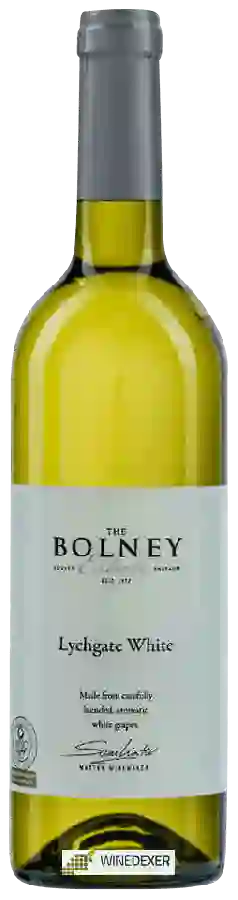
Bolney Wine EstateLychgate White
 White wine



This wine generally goes well with
The Lychgate White of the Bolney Wine Estate is in the top 70 of wines of Sussex.

Wine flavors and olphactive analysis




On the nose the Lychgate White of Bolney Wine Estate in the region of England often reveals types of flavors of earth, vegetal or tree fruit and sometimes also flavors of citrus fruit, floral or tropical fruit.
Details and technical informations about Bolney Wine Estate's Lychgate White.
Discover the grape variety: Reichensteiner
Aromatic, lively dry whites with a pale golden hue, supple palate and preserved acidity, with delicate notes of light muscat, white flowers (acacia), citrus, apple and florals. Refreshing, drink young. Early-ripening variety suited to northern climates: grown in Germany (Rheinhessen, Mosel), the UK, New Zealand and Japan. German hybrid created in 1939 at Geisenheim (müller-thurgau × madeleine angevine × calabreser fröhlich).
Last vintages of this wine
The best vintages of Lychgate White from Bolney Wine Estate are 2017, 2018, 2014, 0 and 2016.
Informations about the Bolney Wine Estate
The Bolney Wine Estate is one of of the world's greatest estates. It offers 31 wines for sale in the of Sussex to come and discover on site or to buy online.

The wine region of Sussex
English wine county in the south-east, 28% of British wine and home to the great sparklers. Chalky clay-limestone soils (extension of the Paris Basin, same as Champagne). Signature traditional-method sparklers: lively and chiselled with notes of green apple, citrus, brioche, white flowers and a chalky mineral touch, fine bubble — Chardonnay, Pinot Noir and Meunier, 15 months on lees. Cool-climate acidity and finesse.
The wine region of England
Quality renaissance of English wine, signature in traditional-method sparklers. On chalk soils identical to Champagne's (South-East), fine, taut bubbles with signature notes of green apple, lemon, white flowers, brioche and chalk, the vivid acidity of a cool climate. Based on Chardonnay, Pinot Noir and Meunier. Still wines a minority: aromatic Bacchus (elderflower, cut grass — the English identity), fresh Pinot Noir.
The word of the wine: Crunchy
A very colorful term to designate a sensation similar to the crunchiness of a grape bursting under the tooth in young and lively wines.