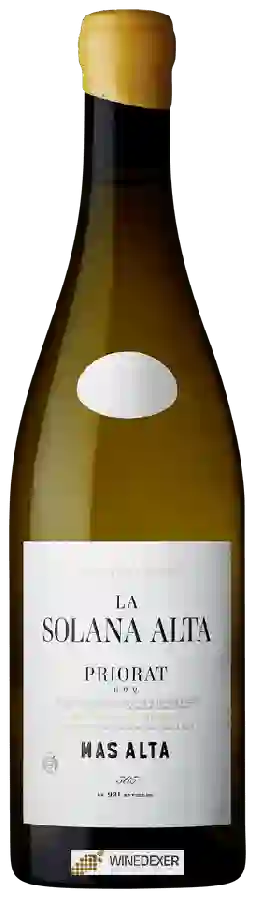
Bodegas Mas AltaLa Solana Alta
 White wine


This wine generally goes well with

Wine flavors and olphactive analysis




On the nose the La Solana Alta of Bodegas Mas Alta in the region of Catalogne often reveals types of flavors of oaky, non oak or earth and sometimes also flavors of microbio, oak or citrus fruit.
Details and technical informations about Bodegas Mas Alta's La Solana Alta.
Discover the grape variety: Vidiano
Structured and aromatic whites with a golden robe, full mouthfeel and preserved acidity, with intense aromas of apricot, white peach, melon, ripe yellow fruits, white flowers, fresh almond and Mediterranean mineral notes. Good ageing potential. Star of the Cretan ampelographic renaissance (Rethymno, Heraklion), compared to Viognier for its richness. A Greek autochthon of Crete, rediscovered in the 2000s by modern winemakers.
Last vintages of this wine

The best vintages of La Solana Alta from Bodegas Mas Alta are 2014, 2017, 2016, 2015
Informations about the Bodegas Mas Alta
The Bodegas Mas Alta is one of of the world's greatest estates. It offers 14 wines for sale in the of Priorat to come and discover on site or to buy online.

The wine region of Priorat
Mythical Catalan terroir, DOCa (Spain's summit alongside Rioja). Powerful, concentrated reds with signature notes of candied black fruits (blackberry, black cherry), graphite, schist, garrigue, cocoa and liquorice, firm tannins and a mineral palate strung by the "llicorella" (black schist and quartz forcing roots down to 20 m). Old vines of Garnacha (roundness) and Cariñena (Samsó, structure). Exceptional ageing.
The wine region of Catalogne
Cradle of Cava (~95% of Spanish output, traditional method): Macabeo, Xarel-lo, Parellada trilogy, fine fruity bubble. Quality peak in Priorat DOCa: dense, mineral reds on llicorella (schist), old-vine Garnacha and Cariñena with black fruit, garrigue notes, firm tannins. Also Penedès, fleshy Montsant, sunny Empordà, Costers del Segre. Mediterranean.
The word of the wine: Yeast
Micro-organisms at the base of all fermentative processes. A wide variety of yeasts live and thrive naturally in the vineyard, provided that treatments do not destroy them. Unfortunately, their replacement by laboratory-selected yeasts is often the order of the day and contributes to the standardization of the wine. Yeasts are indeed involved in the development of certain aromas.